
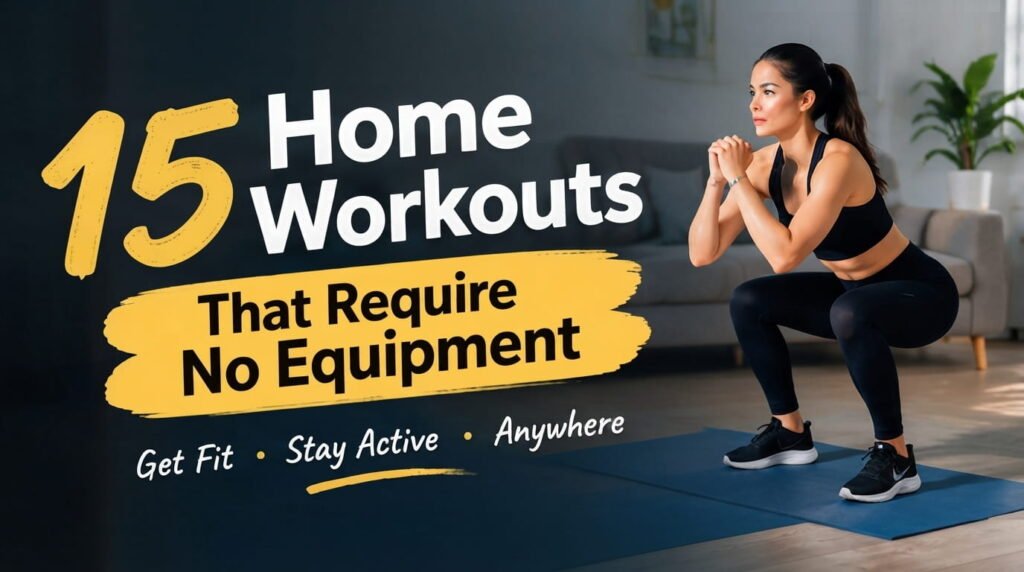
You don’t need a gym membership, expensive machines, or a shelf full of fitness equipment to get a good workout. These home workouts that require no equipment use your own body weight to build strength, improve balance, increase endurance, and keep you active. Whether you have only 10 minutes or a full half hour, you can create an effective routine in your living room, bedroom, or even outdoors. The key is choosing exercises that work different muscle groups and performing them with good form. Here are 15 simple bodyweight exercises you can add to your home fitness routine.
1. Squats
Squats are one of the best bodyweight exercises for strengthening your legs and glutes. Stand with your feet about shoulder-width apart, keep your chest lifted, and lower your hips as though you are sitting in a chair. Push through your feet to return to standing. Start with 10–15 repetitions and focus on controlled movement rather than speed. Keep your knees tracking in the same direction as your toes.

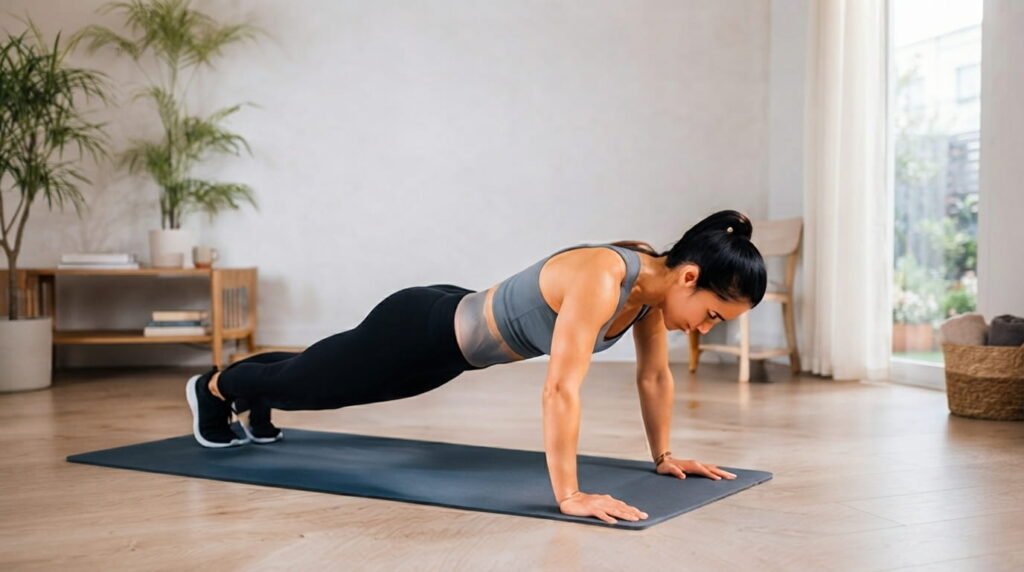
2. Push-Ups
Push-ups work your chest, shoulders, arms, and core at the same time. Begin in a plank position with your hands slightly wider than your shoulders, lower your body while keeping your back straight, then push yourself upward. If standard push-ups are difficult, perform them with your knees on the floor or against a sturdy wall. Aim for 5–12 controlled repetitions to begin.
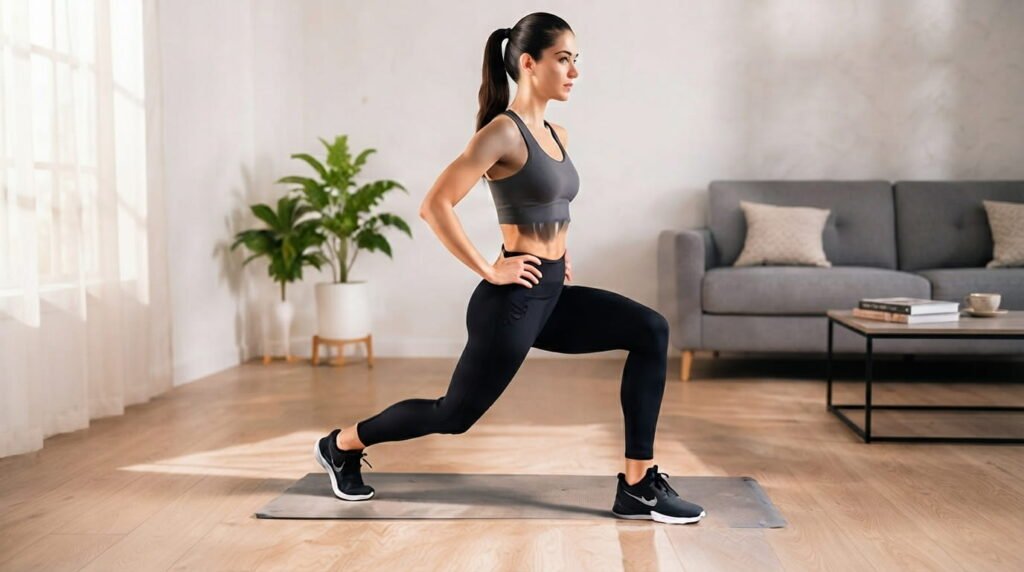
3. Lunges
Lunges are excellent for your thighs, glutes, and hips while also challenging your balance. Step one foot forward and lower your body until both knees are comfortably bent, then push back to your starting position and switch legs. Keep your upper body upright throughout the movement. Try 8–12 repetitions on each leg and use a wall for support if you need extra stability.
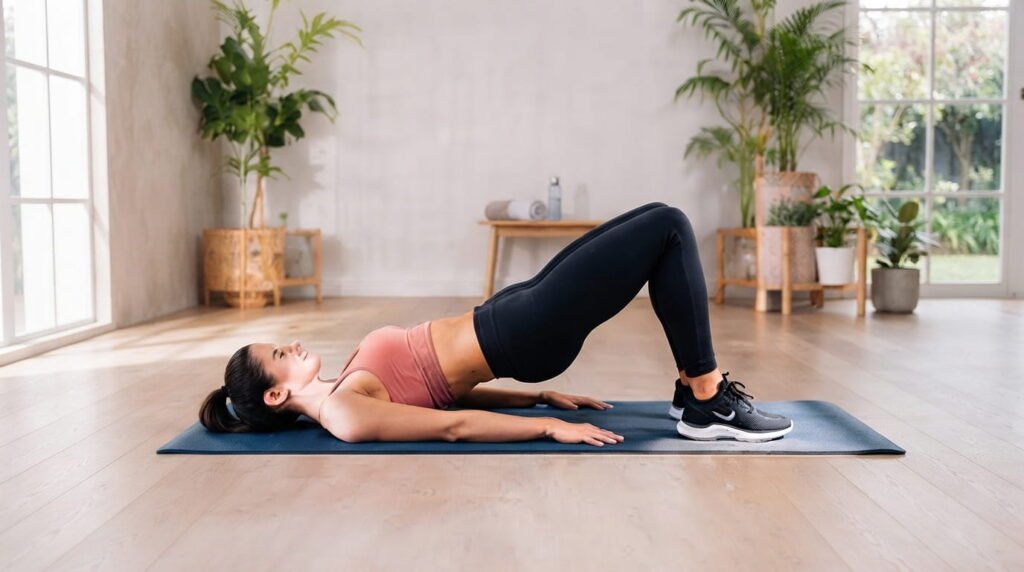
4. Glute Bridges
Glute bridges are simple but effective for strengthening the glutes and supporting the muscles around your hips and lower back. Lie on your back with your knees bent and feet flat on the floor. Lift your hips toward the ceiling, squeeze your glutes briefly at the top, and lower slowly. Perform 12–15 repetitions while avoiding excessive arching of your lower back.
5. Planks
A plank is a straightforward way to challenge your core without doing repeated crunches. Place your forearms on the floor, extend your legs behind you, and keep your body in a straight line from your shoulders to your heels. Tighten your abdominal muscles and breathe normally. Start with 15–30 seconds and gradually increase the time as your core becomes stronger.

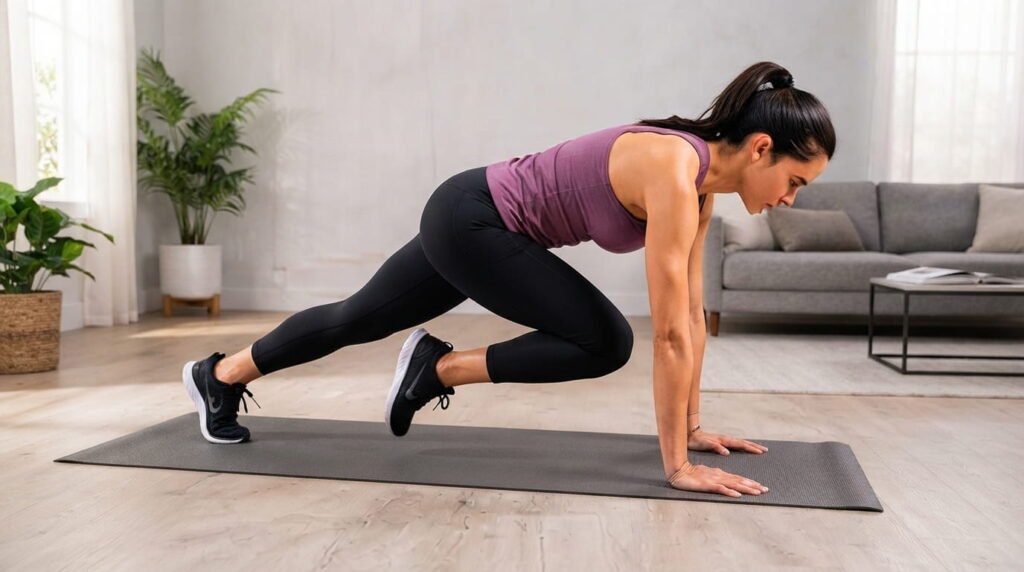
6. Mountain Climbers
Mountain climbers combine core work with a cardio challenge. Start in a high-plank position and bring one knee toward your chest, then quickly switch legs. Keep your hands firmly planted and your hips as stable as possible. Beginners can perform the movement slowly, while more experienced exercisers can increase the pace. Try 20–30 seconds at a time.
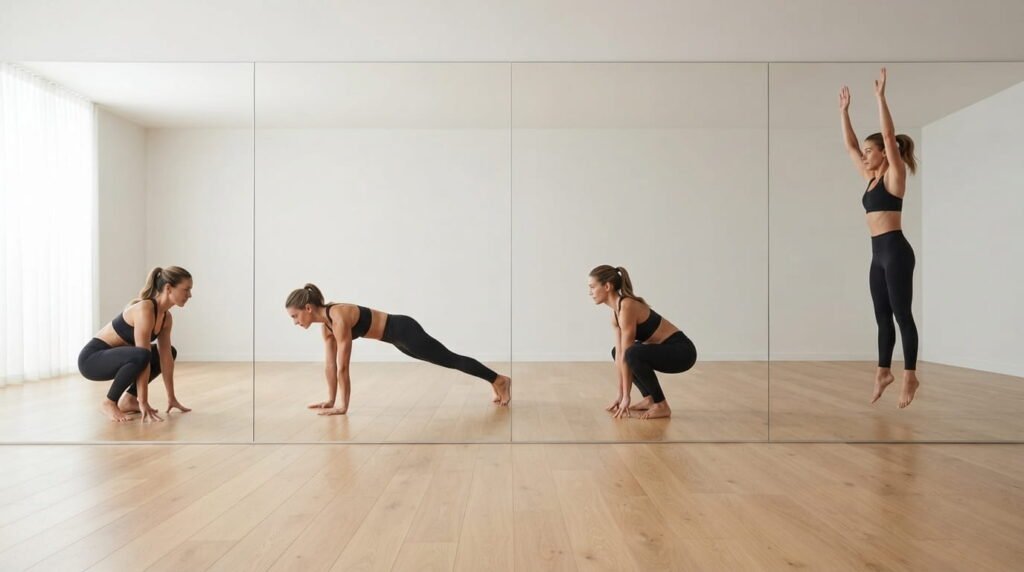
7. Burpees
Burpees provide a full-body workout and can quickly raise your heart rate. From standing, squat down, place your hands on the floor, step or jump your feet back, return to a squat, and stand up. You can add a jump at the end if comfortable. Because burpees are demanding, beginners can skip the jump and perform the movement at a controlled pace.
8. High Knees
High knees are a convenient cardio exercise when you want to get your heart rate up without leaving home. Stand tall and alternate lifting your knees toward your waist while moving your arms naturally. Start at a comfortable pace and gradually increase the speed. Perform them for 20–30 seconds, rest, and repeat for several rounds.

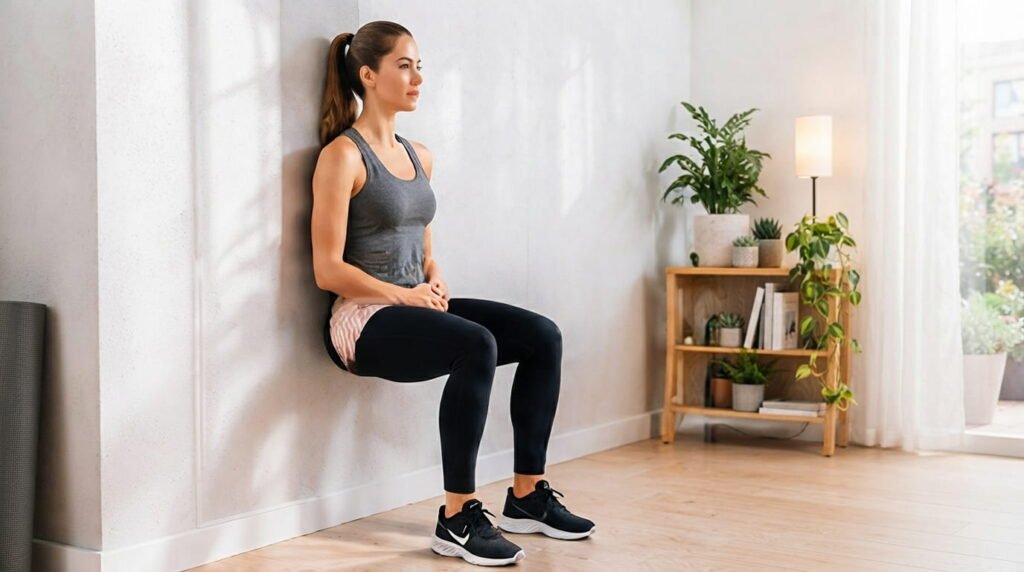
9. Wall Sit
A wall sit targets the thighs and glutes while requiring very little space. Stand with your back against a wall and slowly slide down until your knees are comfortably bent. Hold the position while keeping your back against the wall. Start with 20–30 seconds and work toward longer holds. Stop if you experience sharp pain rather than normal muscle fatigue.
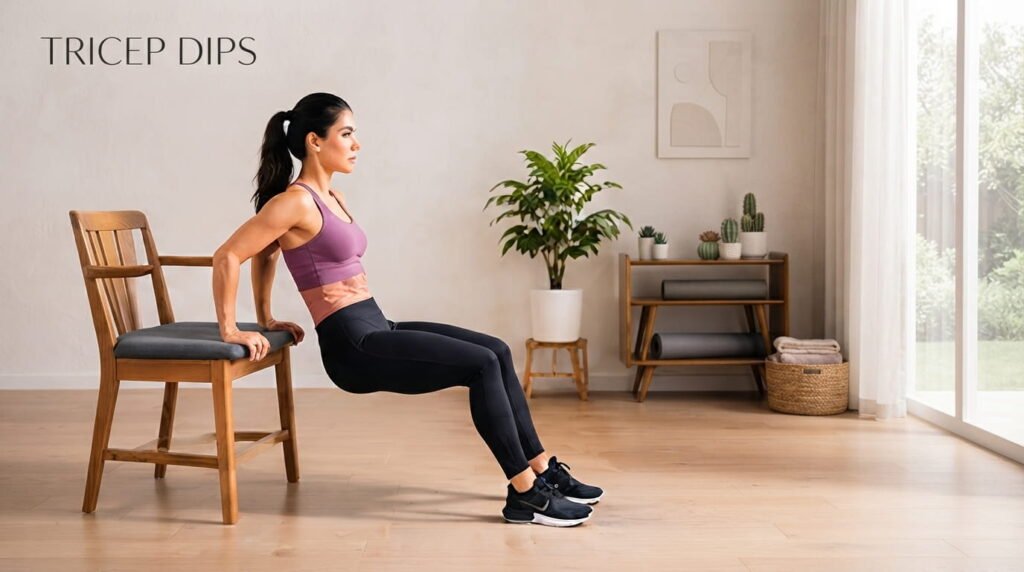
10. Triceps Dips
Triceps dips can strengthen the muscles at the back of your upper arms using a sturdy, stable chair or low surface. Sit near the edge, place your hands beside your hips, and carefully move your body forward before lowering yourself slightly by bending your elbows. Keep the movement controlled and avoid using an unstable piece of furniture. Beginners should use a small range of motion.
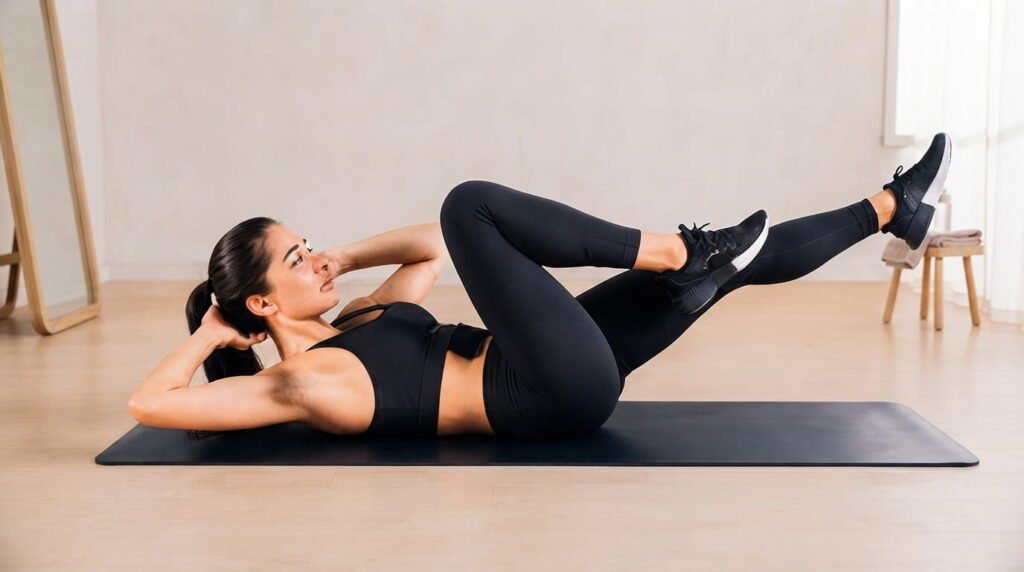
11. Bicycle Crunches
Bicycle crunches engage your abdominal muscles and add a rotational movement to your core routine. Lie on your back, place your hands lightly behind your head, and bring one knee toward your chest while rotating your upper body toward it. Alternate sides slowly rather than pulling on your neck. Try 8–12 repetitions per side with controlled movement.
12. Superman
The Superman exercise focuses on the muscles along your back while also challenging your core. Lie face down with your arms extended in front of you. Gently lift your arms and legs from the floor, hold briefly, and lower them with control. Keep the movement comfortable and avoid forcing your body into a high arch. Start with 8–12 repetitions.

13. Calf Raises
Calf raises are easy to perform almost anywhere and help strengthen the lower legs. Stand with your feet hip-width apart and slowly rise onto the balls of your feet. Pause at the top, then lower your heels back down. For better balance, lightly hold a wall or sturdy surface. Try 15–20 repetitions for one or more sets.

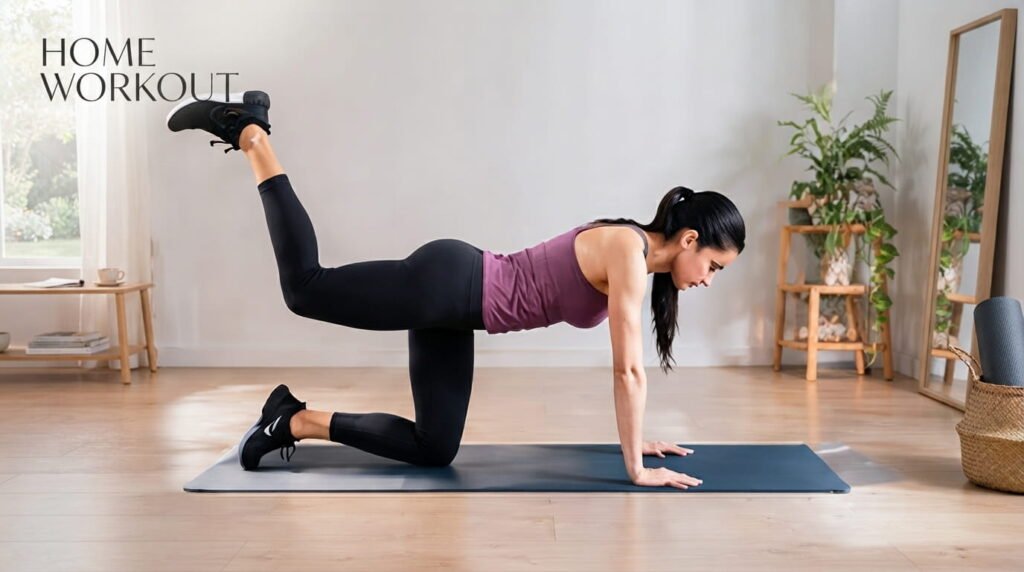
14. Donkey Kicks
Donkey kicks are a useful bodyweight exercise for targeting the glutes. Start on your hands and knees, keep one knee bent, and lift that leg upward without twisting your hips. Lower it slowly and repeat before switching sides. Perform 10–15 repetitions per leg. Keep your core engaged throughout the exercise to maintain stability.
15. Bird Dog
Bird dog exercises improve core stability, balance, and coordination. Start on your hands and knees, then slowly extend one arm and the opposite leg. Hold for a moment before returning to the starting position and switching sides. Keep your hips level rather than rotating your body. Perform 8–12 controlled repetitions on each side.

How to Build a Simple No-Equipment Workout
You don’t need to perform all 15 exercises in one session. For a beginner-friendly workout, choose five exercises that target different areas of the body. For example, combine squats, push-ups, glute bridges, mountain climbers, and planks. Perform each exercise for 30–45 seconds or 8–15 repetitions, rest for 20–30 seconds, and repeat the circuit two or three times.
Always begin with a few minutes of light movement to warm up. Similarly, finish with gentle stretching or relaxed movement. Most importantly, focus on proper technique and gradually increase your workout time or repetitions instead of trying to do too much on your first day.
Conclusion
These home workouts that require no equipment prove that effective exercise can be simple and accessible. From squats and lunges to planks and bird dogs, you can train your legs, upper body, core, and cardiovascular fitness using little more than your own body weight. Choose exercises that match your current fitness level, stay consistent, and increase the challenge gradually. Read Hub encourages you to make movement a regular part of your routine rather than treating exercise as something you only do occasionally.
If you have any questions or concerns regarding this topic, feel free to contact us through our Contact Us page or reach out via the WhatsApp button available on Read Hub. We’re always happy to help!
FAQ
Can I get fit with no-equipment home workouts?
Yes. Bodyweight exercises can improve strength, endurance, balance, mobility, and cardiovascular fitness. Your results will depend on consistency, exercise intensity, nutrition, recovery, and your individual fitness level.
How long should a no-equipment workout last?
A workout can be effective even if you only have 15–20 minutes. Beginners can start with short sessions and gradually work toward longer workouts as their fitness and stamina improve.
How many days a week should I exercise at home?
For general fitness, aim for regular activity throughout the week and include muscle-strengthening exercises on multiple days. Give your muscles enough recovery time, especially after challenging workouts.
Are bodyweight exercises good for beginners?
Yes. Many bodyweight exercises can easily be modified for beginners. Start with easier variations, fewer repetitions, and shorter workout periods, then gradually increase the difficulty as you become more comfortable.
Can I lose weight with no-equipment workouts?
Bodyweight workouts can support weight loss by increasing physical activity and helping you build or maintain muscle. However, weight changes are also strongly influenced by your overall food intake, sleep, daily activity, and other lifestyle factors.