
Protecting sensitive skin from the sun isn’t always as simple as grabbing the first sunscreen on the shelf. Many formulas contain fragrances, alcohol, or chemical filters that can trigger redness, irritation, or breakouts. That’s why choosing the right sunscreen is just as important as wearing one every day.
If you’ve ever applied sunscreen only to experience burning, itching, or watery eyes, you’re not alone. Fortunately, modern skincare brands now offer gentle, dermatologist-tested sunscreens specifically designed for sensitive skin. In this guide from Read Hub, you’ll learn exactly what to look for, which ingredients to avoid, and how to choose a sunscreen that keeps your skin protected without causing irritation.
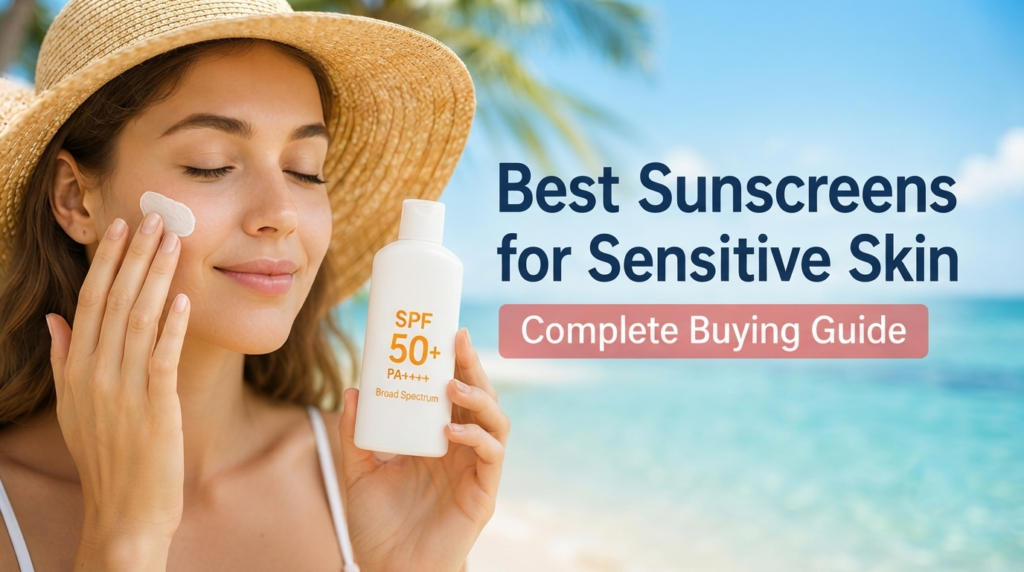
Why Sensitive Skin Needs Sunscreen
Sensitive skin has a weaker protective barrier, making it more vulnerable to UV damage, redness, and inflammation. Daily sun exposure can worsen conditions like rosacea, eczema, and post-inflammatory hyperpigmentation.
A broad-spectrum sunscreen protects against both UVA and UVB rays, helping prevent premature aging, sunburn, and long-term skin damage. Even on cloudy days, UV rays can penetrate through clouds, making sunscreen an everyday essential.

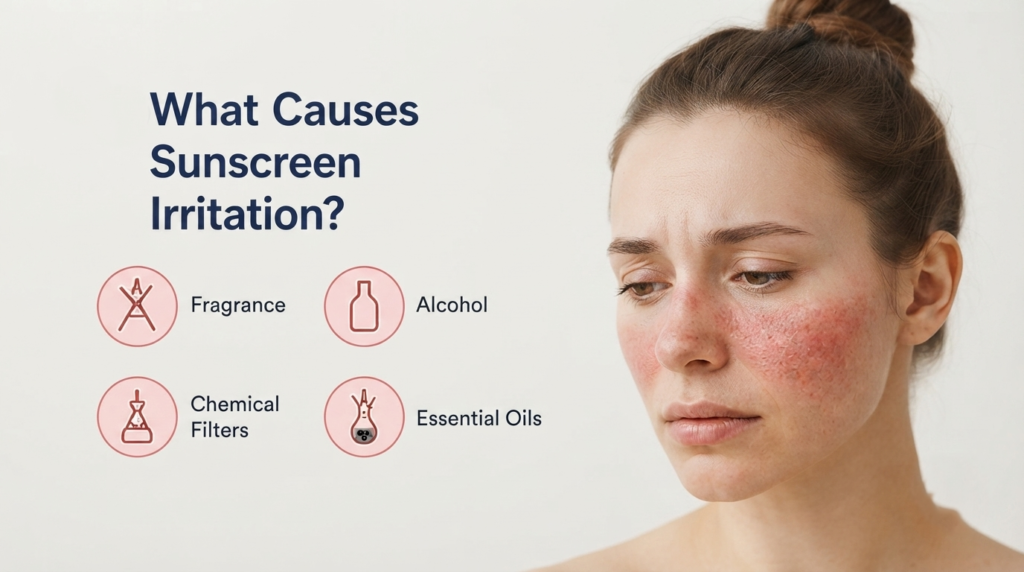
What Causes Sunscreen Irritation?
Not every sunscreen is suitable for delicate skin. Some common ingredients can trigger allergic reactions or irritation.
These include:
- Artificial fragrance
- Alcohol-based formulas
- Essential oils
- Certain chemical UV filters
- Preservatives in low-quality formulations
If your skin burns immediately after application, the sunscreen may not be compatible with your skin type.
Mineral vs. Chemical Sunscreens
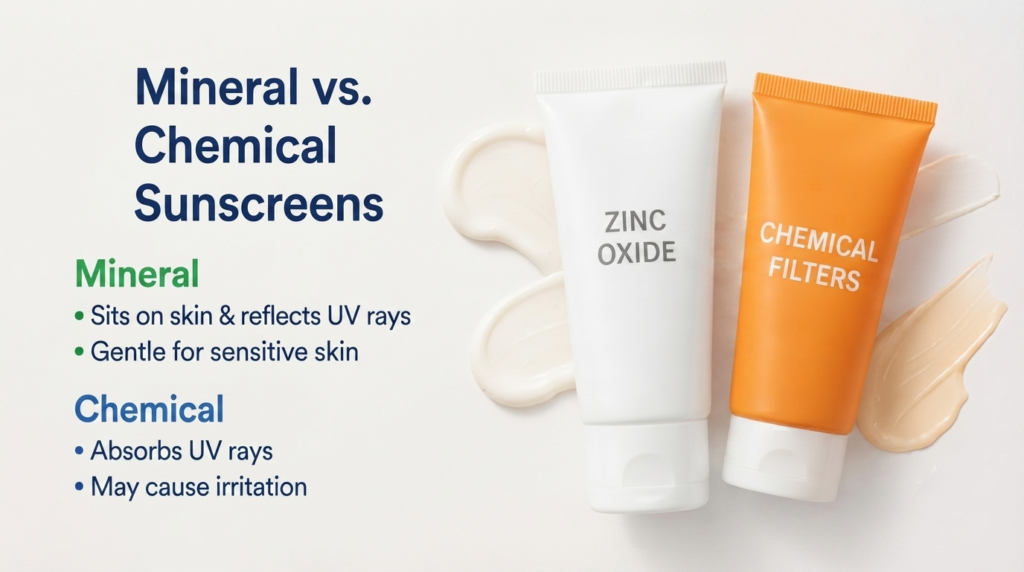
For sensitive skin, mineral sunscreens are generally the safer option.
Mineral Sunscreens
These sit on the skin’s surface and reflect UV rays.
Active ingredients:
- Zinc Oxide
- Titanium Dioxide
Benefits
- Gentle on sensitive skin
- Less likely to cause irritation
- Works immediately after application
- Safe for children and reactive skin
Chemical Sunscreens
Chemical formulas absorb UV rays before they damage the skin.
Common ingredients include:
- Oxybenzone
- Octinoxate
- Avobenzone
Although many people use them comfortably, those with sensitive skin may experience irritation from certain chemical filters.
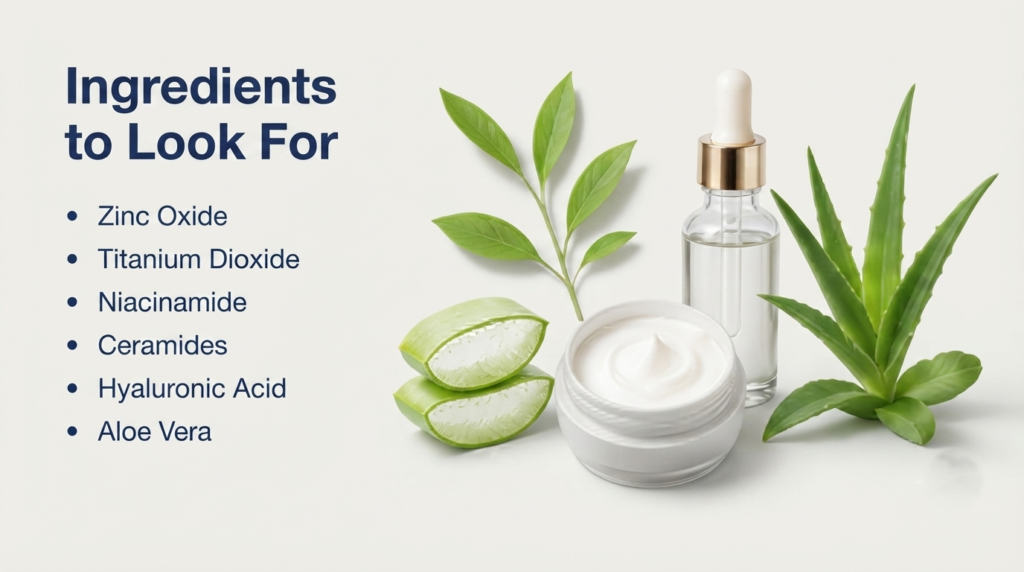
Ingredients to Look For
When shopping for sunscreen, prioritize formulas containing skin-soothing ingredients.
Zinc Oxide
Provides broad-spectrum protection while remaining extremely gentle.
Titanium Dioxide
Excellent for sensitive and acne-prone skin.
Niacinamide
Helps calm redness and strengthen the skin barrier.
Ceramides
Restore moisture and protect sensitive skin.
Hyaluronic Acid
Keeps skin hydrated without feeling greasy.
Aloe Vera
Naturally soothes irritation after sun exposure.
Ingredients to Avoid
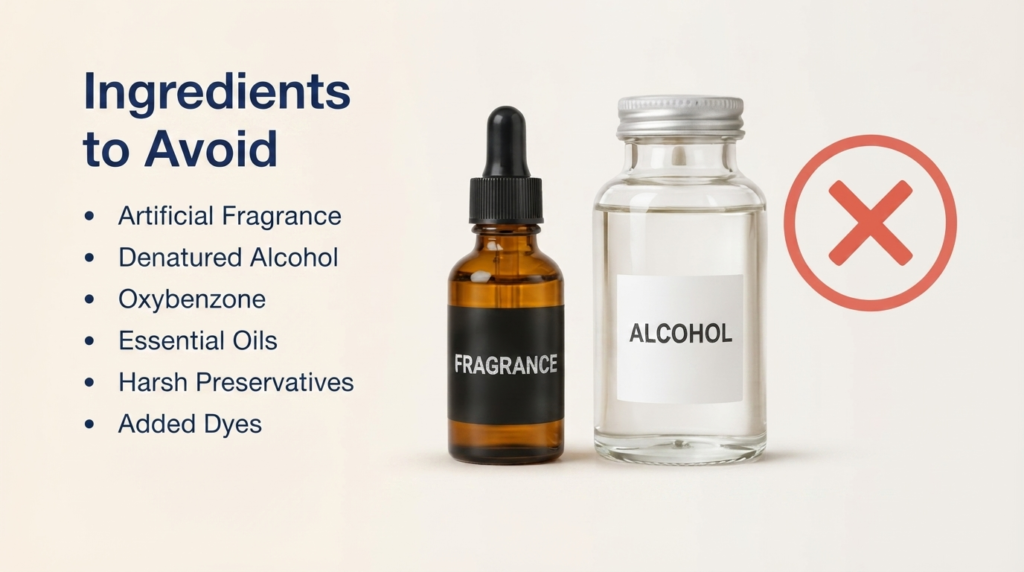
Reading the ingredient label can save you from unnecessary irritation.
Avoid products containing:
- Artificial fragrance
- Denatured alcohol
- Oxybenzone (if your skin reacts easily)
- High concentrations of essential oils
- Harsh preservatives
- Excessive added dyes
The fewer unnecessary ingredients, the better.
How to Choose the Right SPF
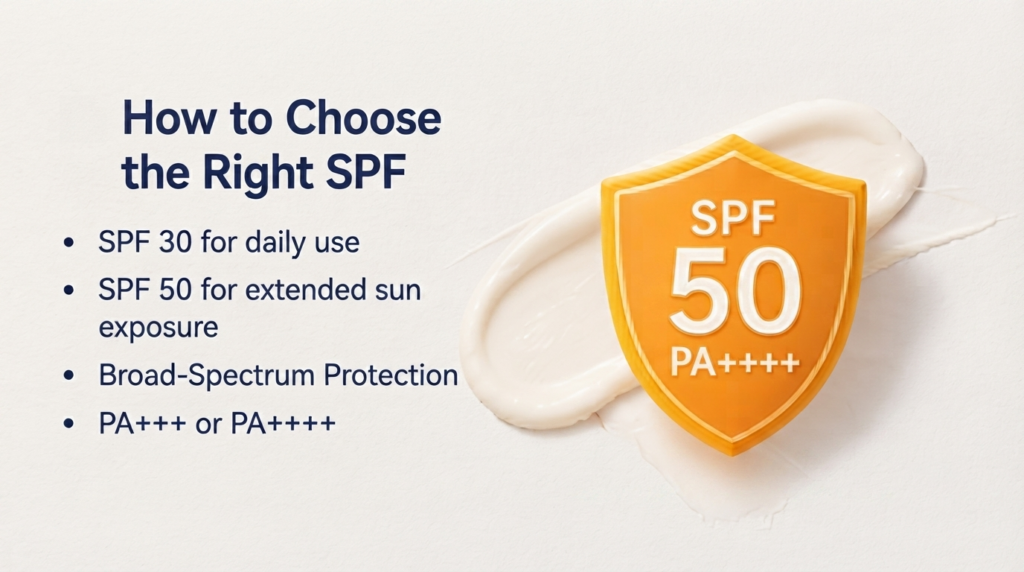
Many people assume higher SPF always means better protection dramatically. In reality, SPF 30 blocks about 97% of UVB rays, while SPF 50 blocks around 98%.
For most people with sensitive skin:
- SPF 30 is suitable for daily indoor and outdoor activities.
- SPF 50 is recommended for prolonged sun exposure.
- Choose Broad-Spectrum protection.
- Look for PA+++ or PA++++ for strong UVA protection.
Best Types of Sunscreens for Sensitive Skin
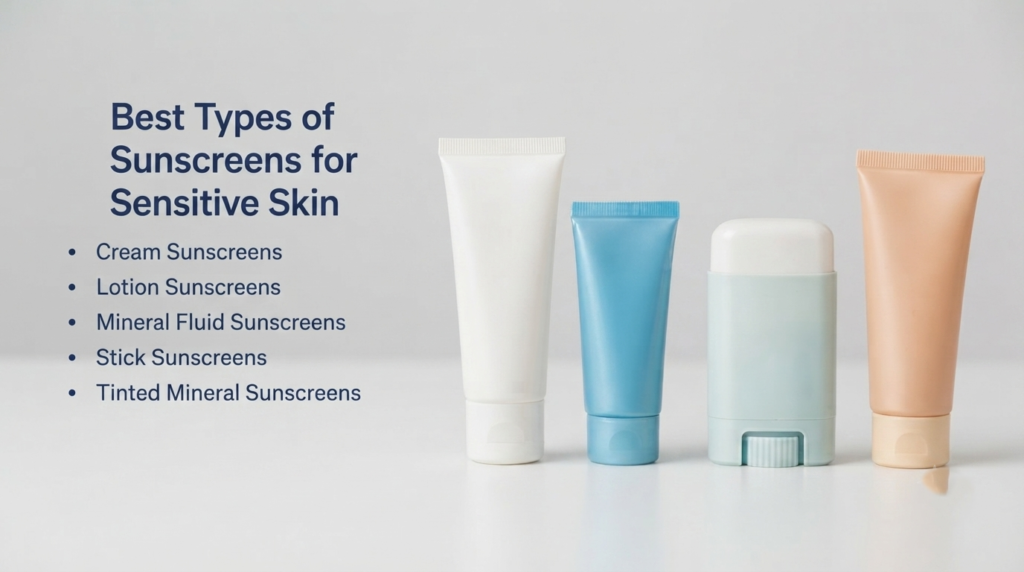
Different skin types benefit from different formulations.
Cream Sunscreens
Ideal for dry and sensitive skin because they provide extra hydration.
Lotion Sunscreens
Suitable for normal and combination skin.
Mineral Fluid Sunscreens
Lightweight and comfortable for oily, sensitive skin.
Stick Sunscreens
Perfect for the face, around the eyes, and easy touch-ups.
Tinted Mineral Sunscreens
Offer sun protection while reducing the white cast common with mineral formulas.
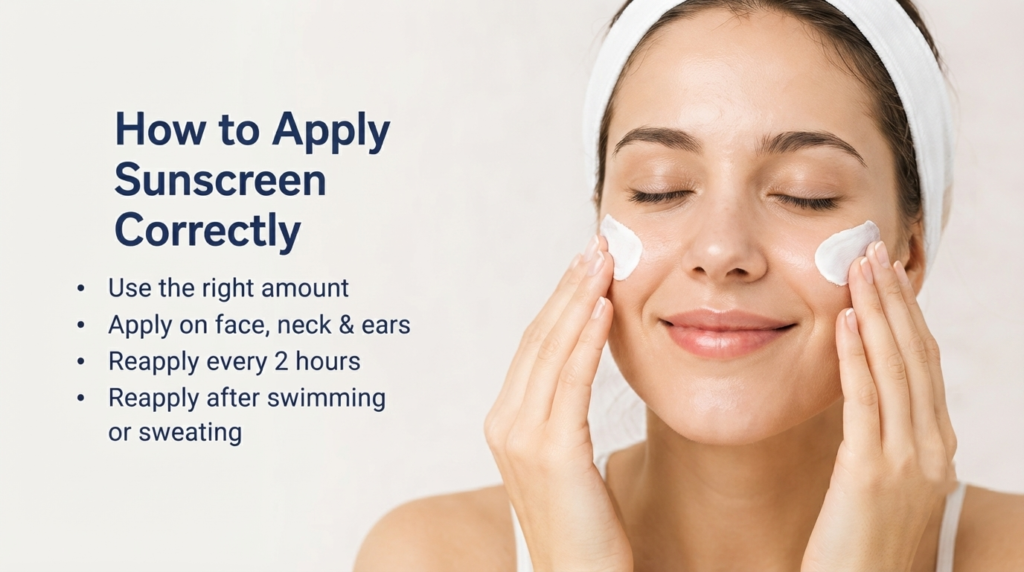
How to Apply Sunscreen Correctly
Even the best sunscreen won’t work if applied incorrectly.
For the face:
- Apply about two finger lengths of sunscreen.
- Cover the ears, neck, and hairline.
- Wait around 15 minutes before sun exposure if using chemical sunscreen.
- Reapply every two hours outdoors.
- Reapply immediately after swimming or excessive sweating.
Remember that sunscreen should be the final step in your morning skincare routine before makeup.
Common Mistakes to Avoid
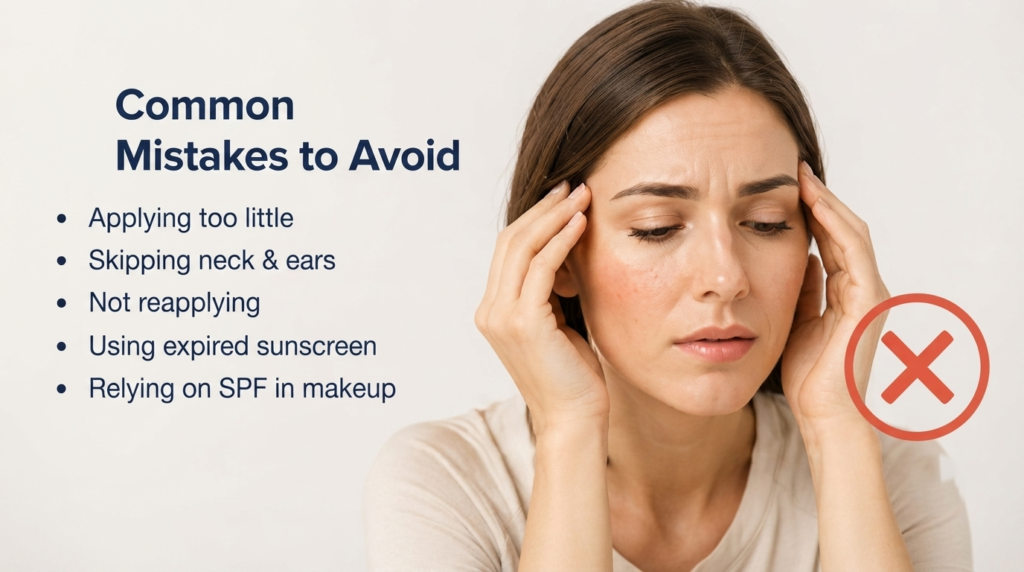
Many people unintentionally reduce their sunscreen’s effectiveness.
Avoid these common mistakes:
- Applying too little product
- Forgetting the neck and ears
- Skipping sunscreen on cloudy days
- Not reapplying throughout the day
- Using expired sunscreen
- Assuming makeup with SPF provides enough protection
Small changes in your routine can make a significant difference in protecting your skin.
Final Buying Tips
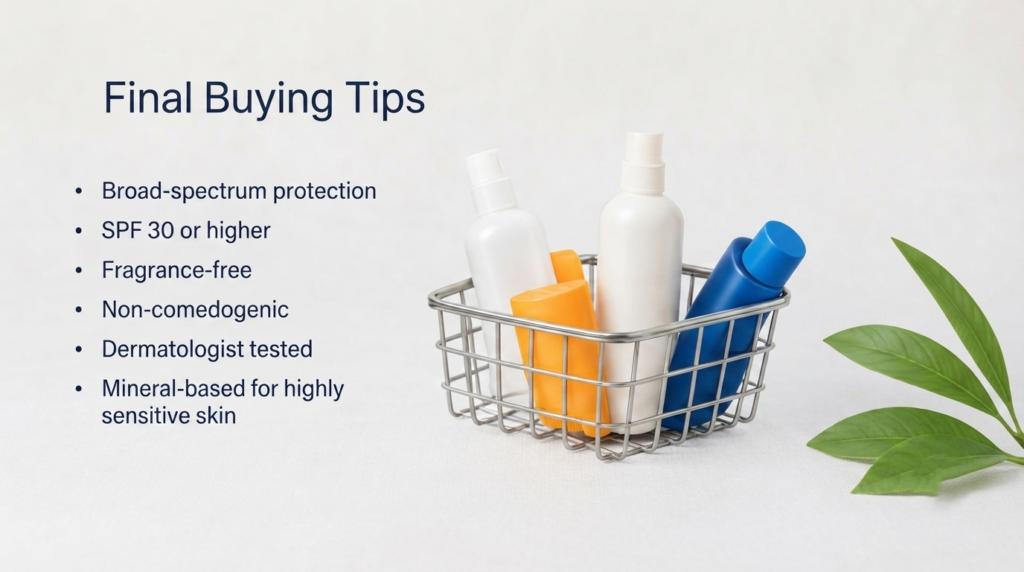
Before purchasing a sunscreen, check for these features:
- Broad-spectrum UVA/UVB protection
- SPF 30 or higher
- Fragrance-free
- Non-comedogenic
- Dermatologist tested
- Mineral-based if your skin is highly reactive
- Suitable for your skin type
If possible, perform a patch test on a small area of skin before applying a new sunscreen to your entire face.
Conclusion
Choosing the best sunscreens for sensitive skin doesn’t have to be overwhelming. By understanding the ingredients that protect your skin—and those that may cause irritation—you can confidently select a sunscreen that offers reliable daily protection while keeping your skin calm and comfortable.
At Read Hub, we believe that healthy skin starts with informed choices. A gentle, broad-spectrum sunscreen used consistently is one of the most effective ways to prevent sun damage, premature aging, and skin irritation. Investing a few minutes in selecting the right product today can benefit your skin for years to come.
If you have any questions or concerns regarding this topic, feel free to contact us through our Contact Us page or reach out via the WhatsApp button available on Read Hub. We’re always happy to help!
FAQ
1. What is the best sunscreen for sensitive skin?
Mineral sunscreens containing Zinc Oxide or Titanium Dioxide are generally considered the safest and most effective choice for sensitive skin.
2. Is SPF 30 enough for everyday use?
Yes. SPF 30 provides excellent daily protection for most people when applied correctly and reapplied as needed.
3. Can sunscreen cause allergic reactions?
Yes. Fragrances, alcohol, and certain chemical UV filters may trigger irritation or allergic reactions in sensitive individuals.
4. Should people with sensitive skin choose mineral sunscreen?
In most cases, yes. Mineral sunscreens are less likely to cause irritation because they sit on the skin’s surface rather than being absorbed.
5. How often should sunscreen be reapplied?
Reapply every two hours during sun exposure, or immediately after swimming, sweating, or towel drying.
6. Can I wear sunscreen under makeup?
Absolutely. Apply sunscreen as the final step of your skincare routine before applying makeup.