

Studying for long hours doesn’t always lead to better grades. In fact, many successful students achieve excellent results by studying more efficiently rather than simply studying longer. The secret lies in using proven learning techniques that improve focus, memory, and understanding while reducing wasted time.
Whether you’re preparing for school exams, university tests, or professional certifications, developing smarter study habits can make learning easier and less stressful. In this guide, Read Hub shares practical, research-backed techniques that help you study more effectively, retain information longer, and perform with confidence.

1. Set Clear Study Goals
Before opening your books, decide exactly what you want to accomplish during your study session. Having clear goals helps you stay focused and prevents wasting time on unimportant tasks.
Instead of saying, “I’ll study science today,” choose a specific goal such as, “I’ll complete Chapter 3 and solve 20 practice questions.”
Practical Tips
- Break large subjects into smaller tasks.
- Set realistic daily goals.
- Prioritize difficult topics first.
- Keep a checklist to track completed tasks.
Clear goals make studying more organized and productive.

2. Use Active Learning Techniques
Simply reading your notes repeatedly isn’t the most effective way to learn. Active learning keeps your brain engaged and improves long-term memory.
Try explaining concepts in your own words, teaching someone else, creating flashcards, or testing yourself without looking at your notes.
Effective Methods
- Self-quizzing
- Flashcards
- Mind maps
- Teaching others
- Summarizing chapters
The more actively you interact with information, the better you’ll remember it.

3. Follow the Pomodoro Technique
Studying for hours without taking breaks can reduce concentration and productivity. The Pomodoro Technique helps you stay focused by dividing study time into short sessions.
A common method is:
- Study for 25 minutes
- Take a 5-minute break
- Repeat four times
- Then enjoy a longer 20–30 minute break
Short breaks help your brain recharge, making it easier to stay focused throughout the day.

4. Create a Distraction-Free Study Space
Your environment has a significant impact on your ability to concentrate. A quiet, organized workspace helps you stay focused and complete tasks more efficiently.
Choose a study area with good lighting, a comfortable chair, and minimal distractions. Keep only the materials you need on your desk and silence unnecessary phone notifications.
Study Environment Tips
- Keep your desk clean.
- Use proper lighting.
- Turn off social media notifications.
- Wear noise-canceling headphones if needed.
- Study in the same place regularly.
A dedicated study space trains your brain to focus whenever you sit down to learn.

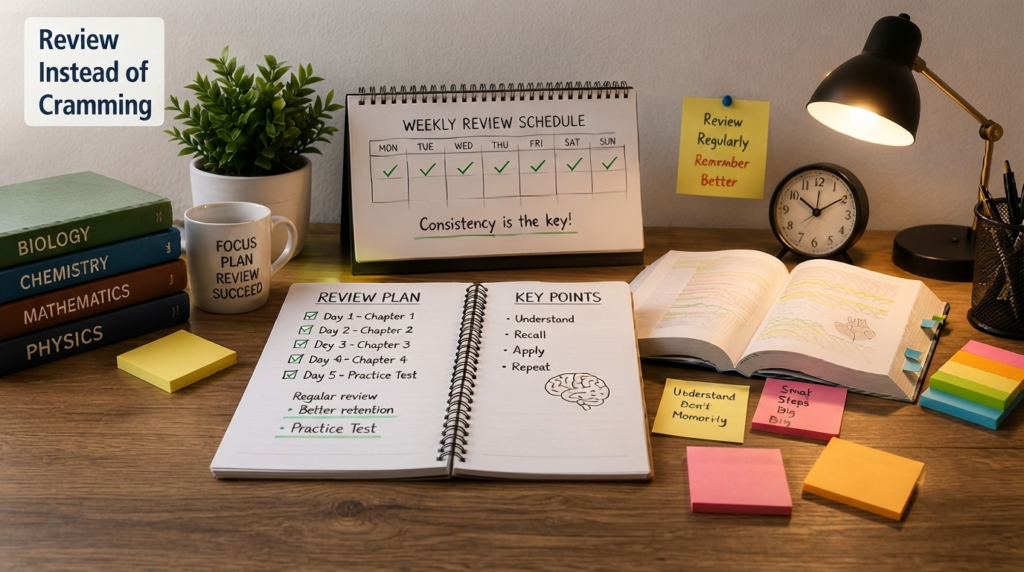
5. Review Instead of Cramming
Many students wait until the night before an exam to study, but cramming often leads to poor retention and unnecessary stress. Reviewing information regularly is far more effective.
Spend a few minutes each day revisiting previous lessons. This technique, known as spaced repetition, strengthens memory and makes it easier to recall information during exams.
Consistent review not only improves understanding but also boosts confidence when test day arrives.
6. Practice with Real Questions
One of the best ways to prepare for exams is by practicing with real or sample questions. This helps you understand the exam format, identify weak areas, and improve your confidence.
After completing each topic, test yourself without looking at your notes. Review your mistakes carefully and focus on improving those areas before moving on.
Practical Tips
- Solve past exam papers.
- Take timed practice tests.
- Review incorrect answers.
- Focus on understanding concepts, not just memorizing facts.
Regular practice helps reduce exam anxiety and improves performance.

7. Take Care of Your Health
Your brain performs best when your body is healthy. Lack of sleep, poor nutrition, and dehydration can make studying more difficult and reduce concentration.
Aim for 7–9 hours of sleep, eat balanced meals, stay hydrated, and include regular physical activity in your routine. Even a short walk can help refresh your mind before studying.
Healthy habits improve memory, focus, and overall learning ability.

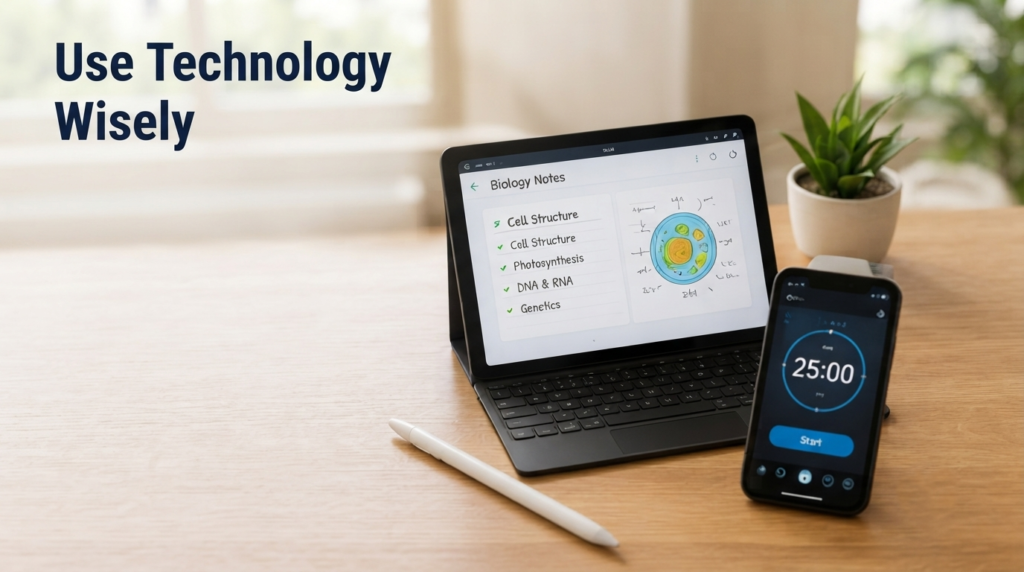
8. Use Technology Wisely
Technology can either improve your productivity or become your biggest distraction. The key is to use it intentionally.
Educational apps, online courses, digital flashcards, and note-taking tools can make learning more engaging and organized. At the same time, limit social media and unnecessary notifications during study sessions.
Helpful Study Tools
- Flashcard apps
- Digital planners
- Note-taking applications
- Online practice quizzes
- Focus timer apps
Using technology wisely helps you study more efficiently without losing focus.
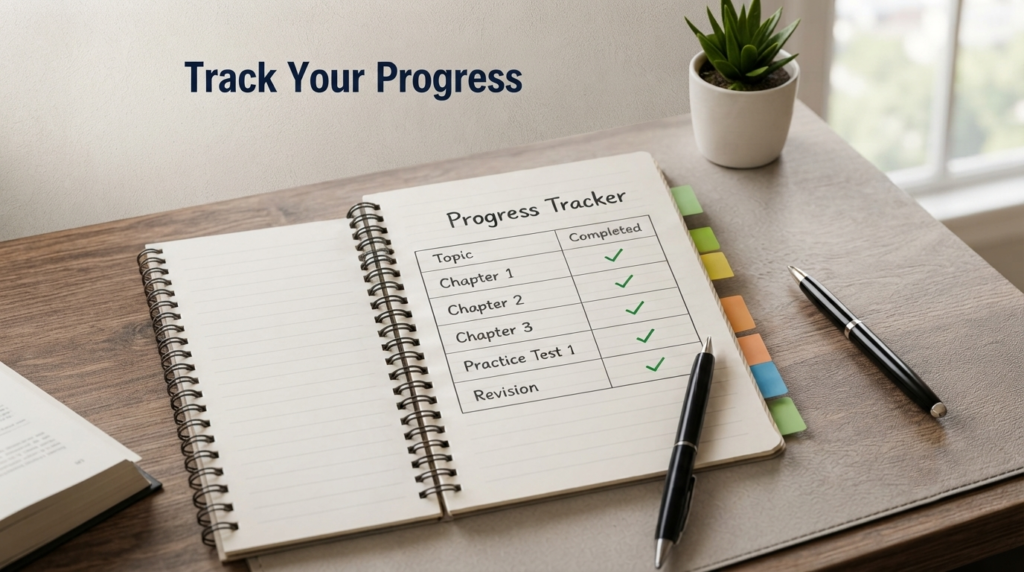
9. Track Your Progress
Monitoring your progress keeps you motivated and helps you stay on schedule. At the end of each study session, review what you’ve completed and identify any topics that need extra attention.
A simple checklist or study journal can help you measure improvement over time and celebrate small achievements.
Tracking your progress also makes it easier to adjust your study plan when needed.
10. Build a Consistent Study Routine
Consistency is more effective than studying for long hours only before exams. A regular study schedule helps your brain develop stronger learning habits and reduces last-minute stress.
Choose specific times each day for studying and stick to your routine as much as possible. Even one to two focused hours each day can produce excellent results when practiced consistently.
The goal is to make studying a habit rather than a burden.

Conclusion
Learning how to study smarter, not harder, is about using effective techniques instead of spending endless hours with your books. By setting clear goals, practicing active learning, managing your time wisely, and maintaining healthy habits, you can improve your understanding, remember information longer, and perform better in exams.
At Read Hub, we believe that smart study strategies can help every student achieve their academic goals with less stress and greater confidence. Start applying these proven techniques today and enjoy more productive learning sessions.
If you have any questions or concerns regarding this topic, feel free to contact us through our Contact Us page or reach out via the WhatsApp button available on Read Hub. We’re always happy to help!
FAQ
1. Does the Pomodoro Technique really work?
Yes. The Pomodoro Technique improves focus by combining short study sessions with regular breaks, helping you stay productive without feeling overwhelmed.
2. What is the best way to study smarter?
The best way is to use active learning techniques, set clear goals, review regularly, and study in focused sessions instead of cramming.
3. How many hours should I study each day?
It depends on your goals, but 1–3 hours of focused, distraction-free study is often more effective than many hours of unfocused studying.
4. Why is active learning better than rereading notes?
Active learning improves understanding and long-term memory by encouraging you to recall and apply information instead of simply reading it repeatedly.
5. How can I stay focused while studying?
Create a quiet study environment, remove distractions, set specific goals, and take regular breaks to maintain concentration and productivity.