
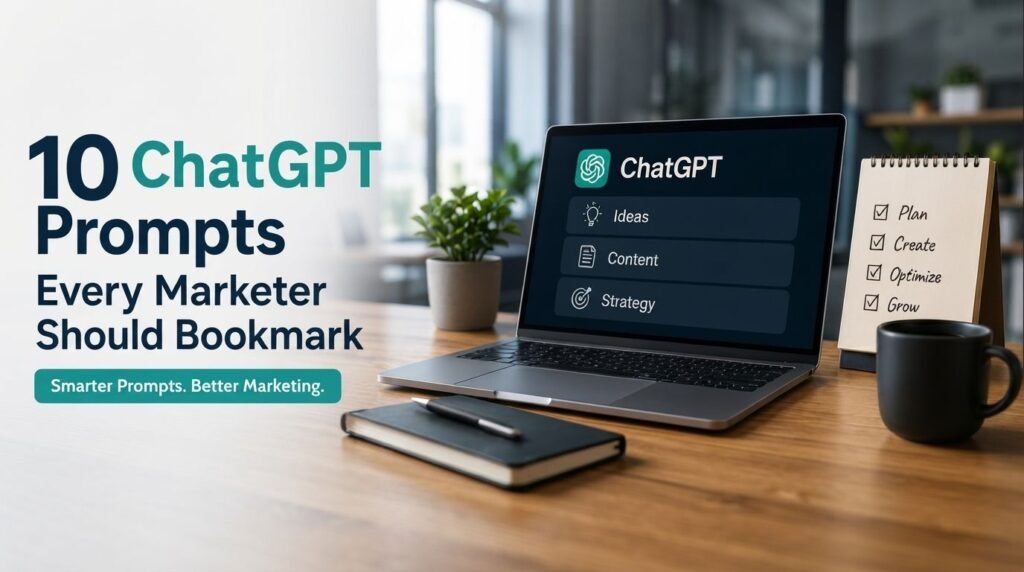
Good marketing still depends on creativity, research, and strategy, but the right AI tools can make the process much faster. With well-written ChatGPT prompts for marketers, you can turn a rough idea into a useful content brief, generate campaign concepts, improve copy, or organize research in minutes.
The key is not simply asking ChatGPT to “write something.” Better results come from giving it a clear role, specific context, audience, goal, and desired format. Below are 10 practical prompts you can bookmark and adapt for your daily marketing work. Read Hub has kept each one flexible so you can use it across different campaigns, industries, and platforms.
1. Customer Persona Prompt
Before creating content, make sure you understand who you’re speaking to. A detailed customer persona can help you identify your audience’s problems, motivations, objections, and buying priorities.
Prompt:
Act as an experienced market researcher. Create a detailed customer persona for [product/service]. My target market is [audience]. Include their goals, challenges, common objections, buying motivations, preferred content formats, questions they ask, and factors that influence their purchasing decisions. Present the information in a clear table and highlight the most important marketing insights.
Use the results as a starting point rather than treating an AI-generated persona as verified customer research.

2. Content Ideas Prompt
Running out of content ideas is common, especially when publishing regularly. Instead of asking for random topics, give ChatGPT your niche and audience.
Prompt:
Act as a senior content strategist. My business is in [industry], and my target audience is [audience]. Generate 20 original content ideas that address real problems, questions, and interests of this audience. For each idea, provide a suggested title, search intent, content angle, and recommended format such as blog post, video, carousel, or email. Avoid generic topics and repeated ideas.
This can give you a useful editorial starting point while leaving room for your own expertise and research.

3. SEO Keyword Prompt
ChatGPT can help organize keyword research, but it shouldn’t replace dedicated SEO tools or actual search-result analysis.
Prompt:
Act as an SEO content strategist. I want to create content about [topic] for [target audience]. Identify relevant primary, secondary, long-tail, and semantic keywords. Group them according to search intent: informational, commercial, navigational, and transactional. Also suggest related questions users may search for. Avoid keyword stuffing and explain which keywords should be prioritized.
Afterward, validate important keywords using reliable SEO and search data before building your strategy around them.
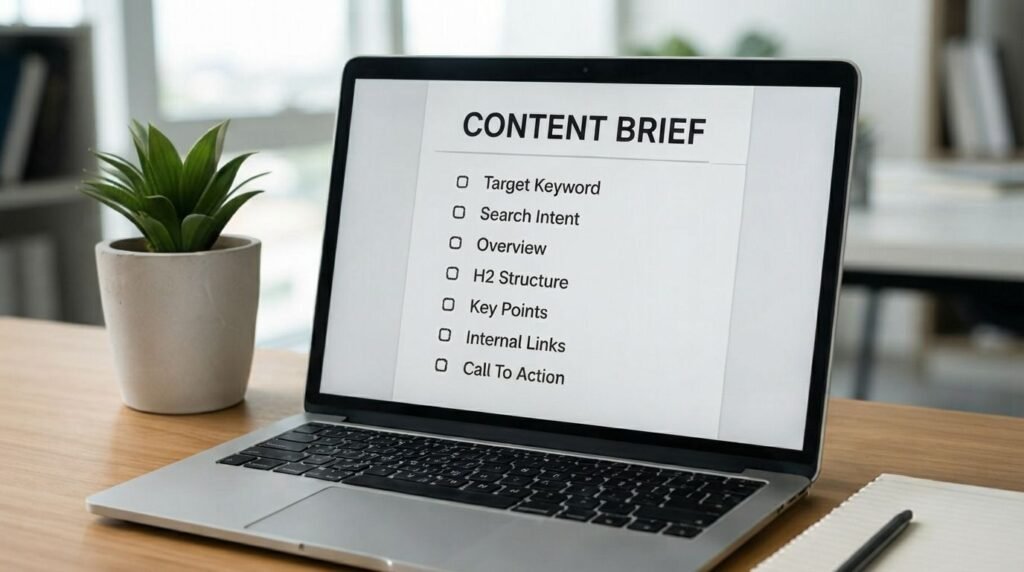
4. Blog Brief Prompt
A strong content brief makes writing much easier because the writer knows exactly what the article needs to accomplish.
Prompt:
Create a comprehensive SEO content brief for an article targeting [primary keyword]. The target audience is [audience], and the search intent is [intent]. Include a recommended title, meta description, H1, H2 structure, important subtopics, questions to answer, entities to mention, internal linking opportunities, and a suggested conclusion. Keep the structure helpful for readers rather than writing solely for search engines.
This is particularly useful when you manage multiple writers or publish content consistently.
5. Social Media Prompt
One piece of content can often become several social posts. The trick is to adapt the message rather than simply copying the same paragraph everywhere.
Prompt:
Act as a social media strategist. Turn the following content into platform-specific posts for LinkedIn, Facebook, Instagram, and X. Keep the core message consistent but adapt the tone, length, structure, and call to action for each platform. Make each version natural and engaging without sounding promotional or repetitive. Content: [paste content].
Always review the final posts and add your brand’s own perspective before publishing.

6. Email Marketing Prompt
Email copy needs to be clear and useful without overwhelming the reader. ChatGPT can help you explore different approaches quickly.
Prompt:
Act as an experienced email marketing copywriter. Write a marketing email for [product/service] aimed at [audience]. The goal is [goal]. Highlight the main customer benefit, address one important objection, and finish with a clear but natural call to action. Create three subject lines using different approaches: curiosity, benefit-driven, and straightforward. Keep the email conversational and avoid exaggerated claims.
For promotional campaigns, make sure any claims, offers, prices, and deadlines are accurate before sending.

7. Competitor Research Prompt
AI can help you structure competitor research, but don’t assume it knows current competitor information unless you provide verified data.
Prompt:
Act as a competitive marketing analyst. I will provide information about three competitors: [competitor data]. Compare their positioning, target audience, messaging, content themes, strengths, weaknesses, offers, and potential gaps. Identify opportunities my brand could explore without copying competitors. Present the findings in a comparison table followed by five actionable recommendations.
This approach is much more reliable than asking ChatGPT to guess what competitors are currently doing.

8. Ad Copy Prompt
Advertising requires concise messaging. A useful prompt can help you test different angles before deciding which direction deserves further testing.
Prompt:
Act as a performance marketing copywriter. Create five ad-copy variations for [product/service] targeting [audience]. The campaign goal is [goal]. Each variation should use a different angle: problem-solution, benefit, social proof, urgency, and curiosity. Include a headline, primary copy, and CTA. Keep all claims factual and avoid misleading language.
You can then compare the variations against your actual campaign data and audience insights.

9. Content Repurposing Prompt
Creating everything from scratch isn’t always necessary. Existing high-quality content can often be transformed into useful formats for different channels.
Prompt:
Repurpose the following article into a content package for multiple channels. Create: 5 social media posts, 3 short-video concepts, 5 email subject ideas, 10 useful quotes or takeaways, and one short newsletter summary. Keep the original facts accurate, avoid repeating the same wording, and tailor each piece to its intended audience. Original content: [paste article].
This works especially well for evergreen guides, research reports, tutorials, and detailed blog posts.

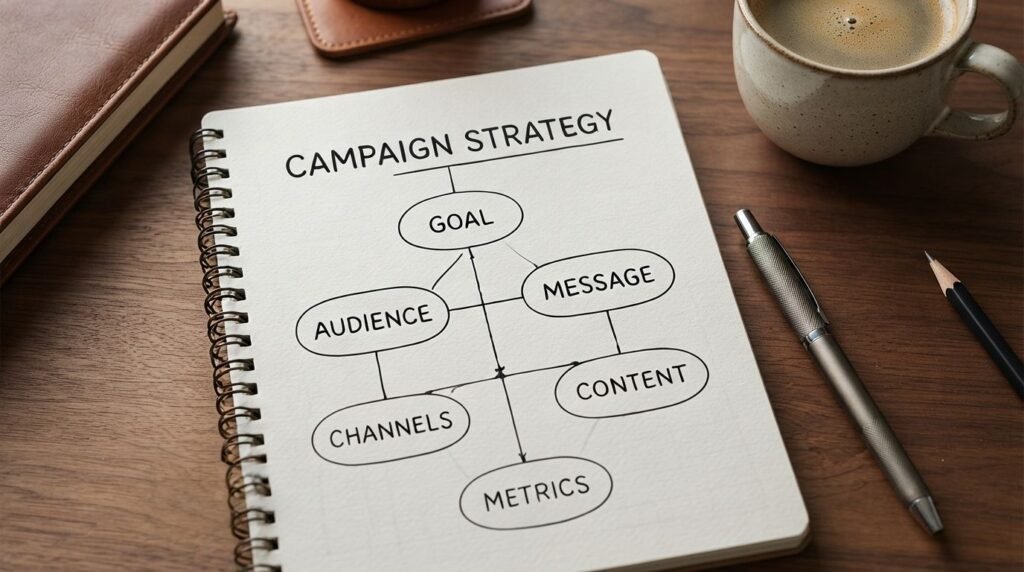
10. Campaign Strategy Prompt
A campaign needs more than individual pieces of content. You can use ChatGPT to organize your initial thinking into a structured plan.
Prompt:
Act as a senior marketing strategist. Build a 30-day marketing campaign for [product/service]. The target audience is [audience], the main objective is [objective], and the available budget is [budget]. Recommend the core message, content themes, channels, weekly activities, calls to action, key metrics, and testing ideas. Separate strategic recommendations from assumptions that need to be validated with real customer or market data.
Use this as a planning framework, then adjust it according to your budget, resources, historical performance, and actual audience behavior.
Conclusion
The best ChatGPT prompts for marketers don’t try to replace marketing expertise. Instead, they help you organize ideas, explore possibilities, speed up repetitive work, and create a stronger starting point for human decision-making.
From customer research and SEO planning to social media, email campaigns, advertising, and strategy, these 10 prompts can become a practical part of your workflow. Save the ones you use most often, customize them with your own brand information, and always fact-check important claims before publishing.
For more practical AI, digital marketing, and content strategies, keep exploring Read Hub.
If you have any questions or concerns regarding this topic, feel free to contact us through our Contact Us page or reach out via the WhatsApp button available on Read Hub. We’re always happy to help!
FAQ
Can ChatGPT help marketers with SEO?
Yes. ChatGPT can assist with keyword organization, content briefs, search-intent analysis, topic ideas, outlines, and optimization suggestions. However, important keyword and ranking decisions should be validated with current SEO data.
What makes a good ChatGPT prompt for marketing?
A good marketing prompt usually includes the role ChatGPT should take, your business context, target audience, objective, relevant information, constraints, and the format you want in the response.
Can marketers use ChatGPT to write social media posts?
Yes. ChatGPT can generate and adapt social content for different platforms. The strongest results usually come from providing specific audience and brand information and then adding human review before publishing.
Should marketers rely completely on ChatGPT?
No. ChatGPT is a productivity and brainstorming tool, not a replacement for professional judgment, original research, customer feedback, or campaign performance data.
How can I get better results from ChatGPT?
Be specific. Instead of saying “write a marketing plan,” explain your audience, product, goal, budget, tone, platform, limitations, and desired output. You can also ask ChatGPT to identify assumptions or missing information before completing the task.