

Rainy weather, extreme temperatures, or a busy schedule can sometimes keep pets indoors for longer than usual. Fortunately, you don’t need a large space or expensive equipment to keep them active and engaged. The right indoor activities for pets can provide exercise, mental stimulation, and plenty of entertainment while strengthening the bond you share with them. From simple games to homemade enrichment ideas, these activities can work for both cats and dogs with a few adjustments based on their age, size, and personality. Read Hub shares 10 easy ideas you can try at home.

1. Hide-and-Seek
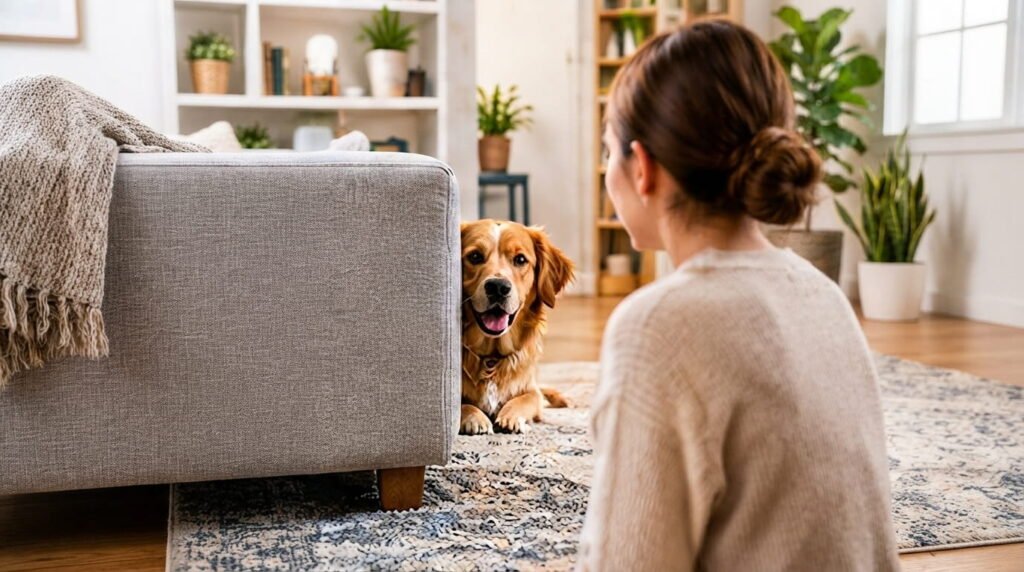
Hide-and-seek is a simple way to encourage your pet to use their senses while moving around the house. Hide behind a door or furniture and call your pet using a familiar voice. When they find you, reward them with praise, affection, or a small treat. Start with easy hiding spots and gradually make the game more challenging.
2. Treat Hunt
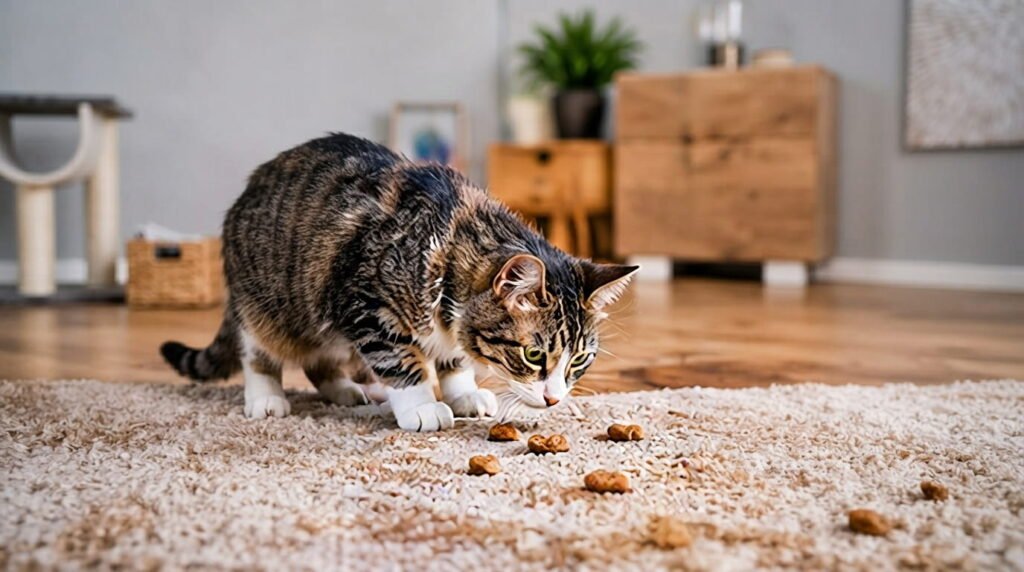
Turn snack time into a fun activity by hiding a few small treats around safe areas of your home. Let your pet search for them using their natural sense of smell. Start by placing treats in obvious locations and increase the difficulty as they understand the game. Keep portions small so the extra treats don’t interfere with their normal diet.
3. Puzzle Toys
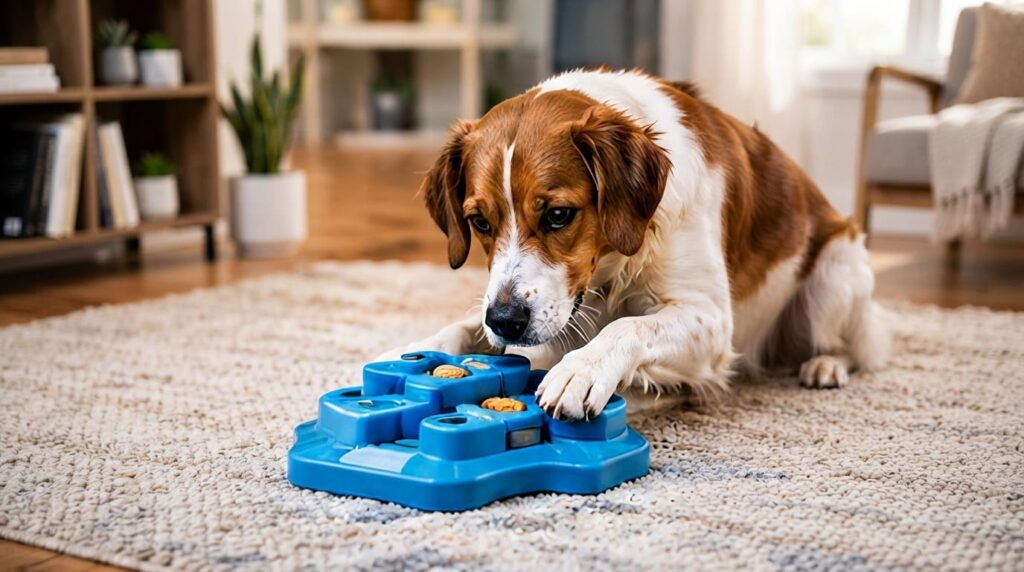
Puzzle feeders and treat-dispensing toys can keep pets mentally engaged while encouraging problem-solving. Choose a toy appropriate for your pet’s size and chewing habits, and supervise them during the first few uses. If you don’t have a puzzle toy, you can create simple food-based enrichment using safe household items, provided there are no small parts that could be swallowed.
4. Indoor Fetch
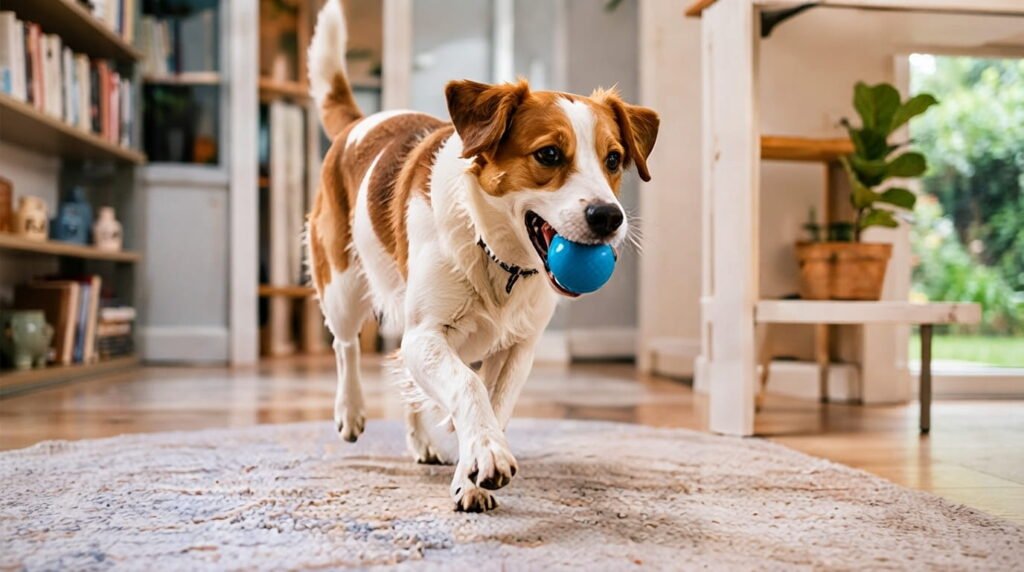
You don’t need a large yard to play fetch. A hallway or clear room can provide enough space for a gentle indoor game with a soft toy. Avoid slippery floors and fragile furniture, and choose a lightweight toy that won’t damage your pet’s teeth or your home.
5. Tug-of-War
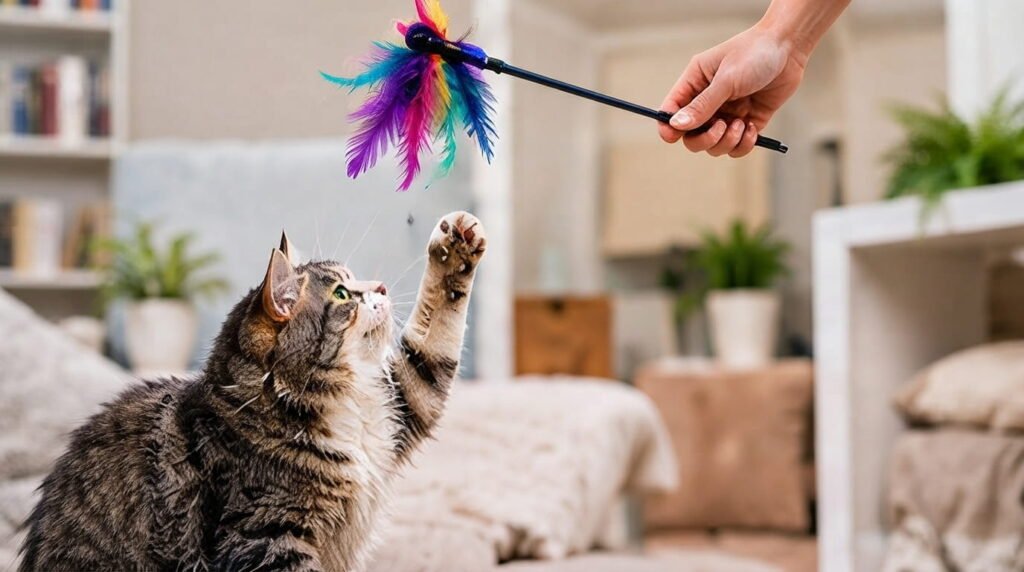
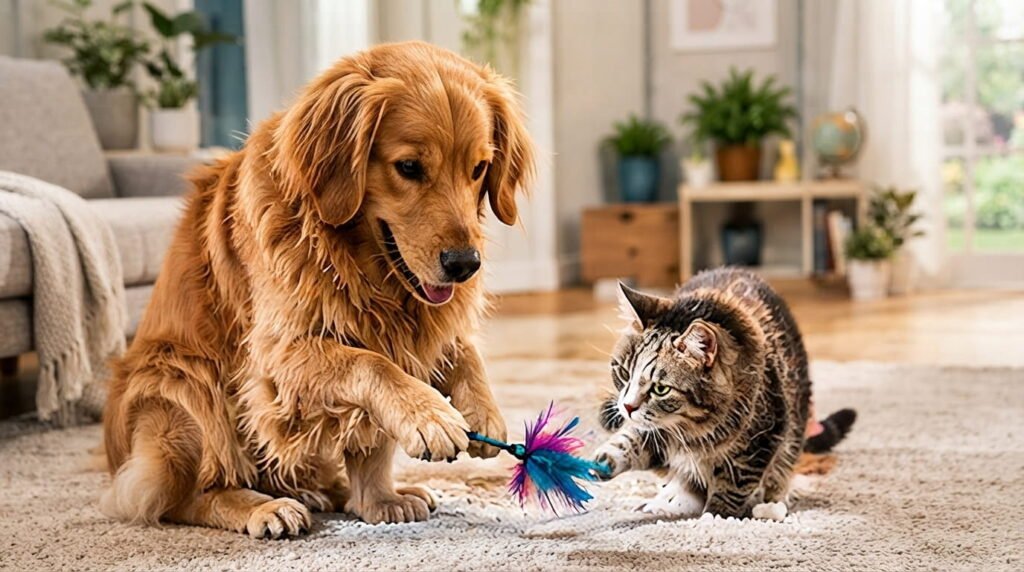
Tug-of-war can provide physical activity and interactive bonding, especially for dogs who enjoy energetic play. Use a strong pet-safe toy and let your dog take breaks between rounds. For cats, a wand toy can provide a similar interactive experience while encouraging them to chase, pounce, and move.
6. Training Sessions
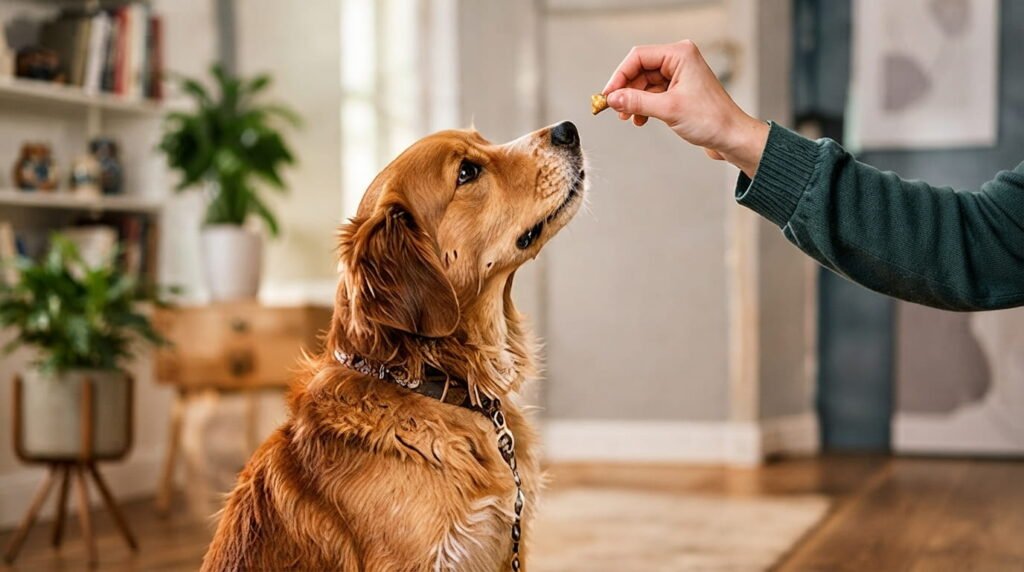
Short training sessions are an excellent way to combine mental stimulation with positive interaction. Practice commands your pet already knows or teach simple behaviors such as sit, stay, touch, or coming when called. Keep sessions brief and rewarding so your pet remains interested rather than frustrated.
7. Create an Indoor Obstacle Course
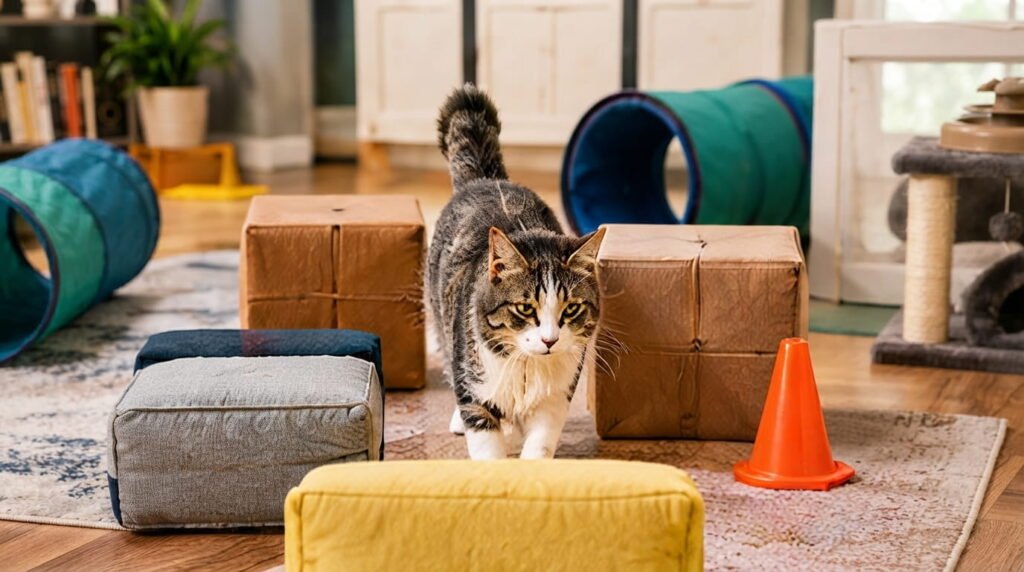
Use safe household objects such as cushions, boxes, tunnels, or chairs to create a simple obstacle course. Guide your pet through the setup using treats or a favorite toy. Make sure everything is stable, remove sharp objects, and leave enough space for your pet to move safely.
8. Rotate Their Toys
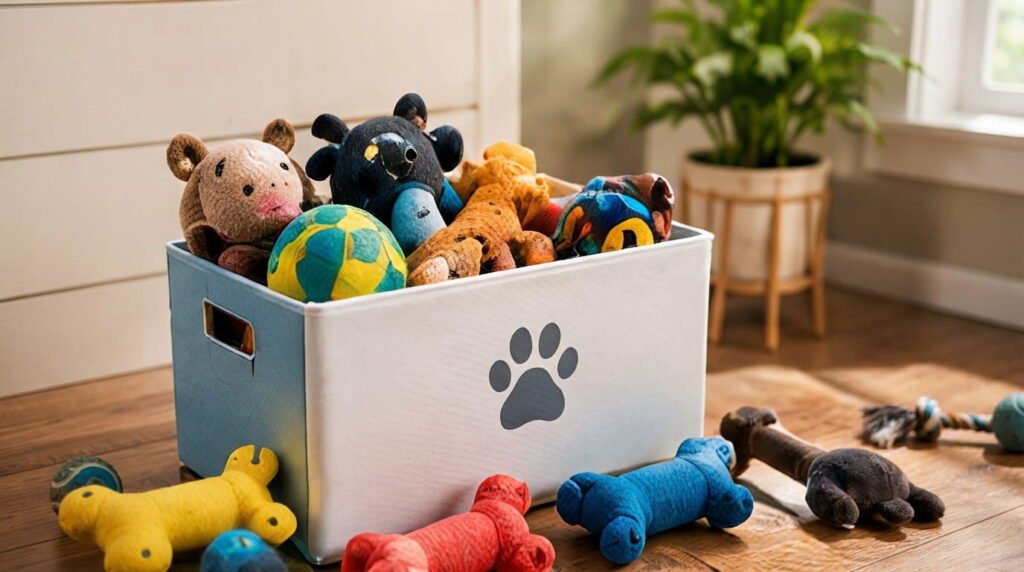
Pets can become less interested in toys when the same ones are available every day. Instead of leaving everything out, keep some toys stored away and introduce them again after several days. Rotating toys can make familiar items feel new while giving your pet different ways to play.
9. Interactive Play
Spend dedicated time playing directly with your pet instead of expecting toys to provide all the entertainment. Cats may enjoy feather wands or chase toys, while dogs may prefer soft balls or interactive games. Follow your pet’s energy level and stop when they show signs of tiredness or disinterest.
10. Grooming and Bonding Time
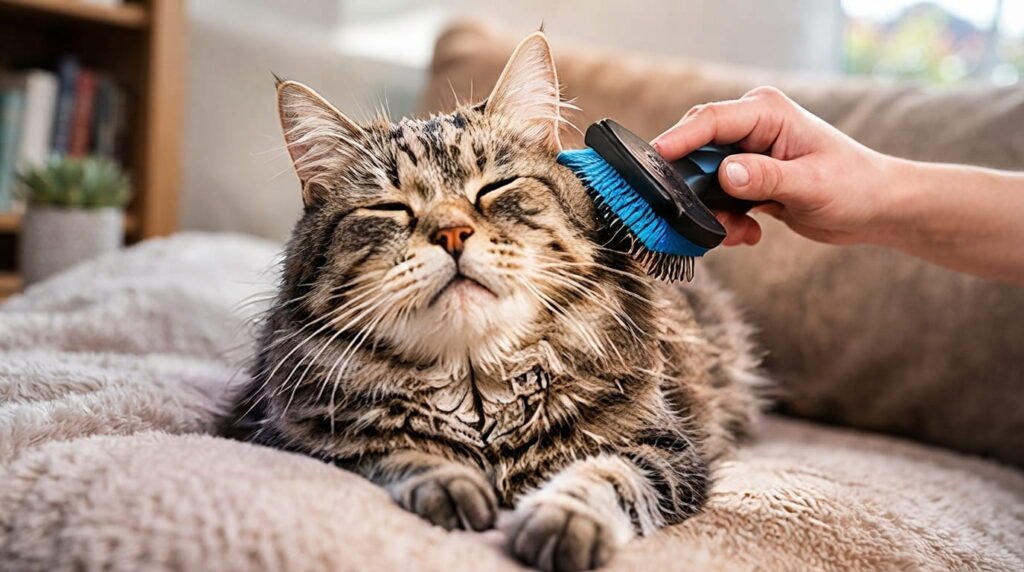
Grooming can become a relaxing indoor activity while also helping you check your pet’s coat, paws, ears, and overall condition. Brush gently and reward calm behavior, especially if your pet is not used to grooming. For pets that enjoy attention, this can be a peaceful way to finish an active play session.
Conclusion
These indoor activities for pets can make time at home more enjoyable while supporting physical movement, mental stimulation, and your relationship with your pet. You don’t need expensive products or complicated setups; simple games, training, toy rotation, and quality time can make a real difference. Choose activities that match your pet’s personality and abilities, and always prioritize safety. For more practical pet-care and lifestyle advice, keep exploring Read Hub.
If you have any questions or concerns regarding this topic, feel free to contact us through our Contact Us page or reach out via the WhatsApp button available on Read Hub. We’re always happy to help!
FAQ
What are the best indoor activities for pets?
Hide-and-seek, treat hunts, puzzle toys, training, and interactive play are simple options that can provide both mental and physical stimulation.
How can I entertain my pet without buying toys?
You can use supervised games such as hide-and-seek, treat searches, simple training, and homemade obstacle courses using safe household items.
How long should indoor pet activities last?
The ideal duration depends on your pet’s age, health, breed, and energy level. Several short sessions throughout the day can work better than one long session.
Are indoor activities enough for pets?
Indoor activities can provide valuable exercise and enrichment, but pets still need an appropriate routine based on their individual physical and behavioral needs.
How do I know when my pet has had enough play?
Heavy panting, slowing down, avoiding the activity, or losing interest can indicate that your pet needs a break. Always allow them time to rest and drink water.