

Investing can feel intimidating when you’re just getting started. With so many options, unfamiliar terms, and conflicting advice online, it’s easy to wonder where to begin. The good news is that successful investing doesn’t require you to be a financial expert. It starts with understanding the basics, creating a simple plan, and staying consistent over time.
In this Beginner’s Guide to Investing, you’ll learn how investing works, why it’s important, the different investment options available, and practical strategies that can help you build long-term wealth. Whether you’re saving for retirement, a home, or financial freedom, this guide from Read Hub will help you take your first steps with confidence.
What Is Investing?
Investing means putting your money into assets that have the potential to grow in value over time. Unlike simply saving money in a bank account, investing gives your money the opportunity to earn returns through market growth, dividends, or interest.
Every investment carries some level of risk, but historically, long-term investing has outperformed keeping cash idle. The key is understanding that investing is a marathon, not a sprint.

Why Should Beginners Invest?
Inflation gradually reduces the purchasing power of money. Investing helps your savings grow faster than inflation while giving you the opportunity to build wealth over the long term.
Some common financial goals include:
- Retirement planning
- Buying a home
- Funding education
- Building passive income
- Achieving financial independence
Starting early is one of the biggest advantages because compound growth allows your investments to generate returns on previous gains.

Set Clear Financial Goals
Before choosing investments, define your goals.
Ask yourself:
- Why am I investing?
- How long can I leave this money invested?
- How much risk am I comfortable taking?
Your investment strategy should match your timeline. Long-term goals generally allow for more growth-focused investments, while short-term goals may require safer options.

Understand Your Risk Tolerance
Risk tolerance is your ability to handle market ups and downs.
Generally:
- Conservative investors prefer lower-risk investments.
- Moderate investors balance growth and stability.
- Aggressive investors focus on higher growth with greater volatility.
Understanding your comfort level helps you avoid emotional decisions during market fluctuations.

Build an Emergency Fund First
Before investing, save enough money to cover approximately three to six months of essential living expenses.
An emergency fund prevents you from selling investments during unexpected situations such as job loss, medical emergencies, or major repairs.
Think of it as the foundation of a healthy financial plan.

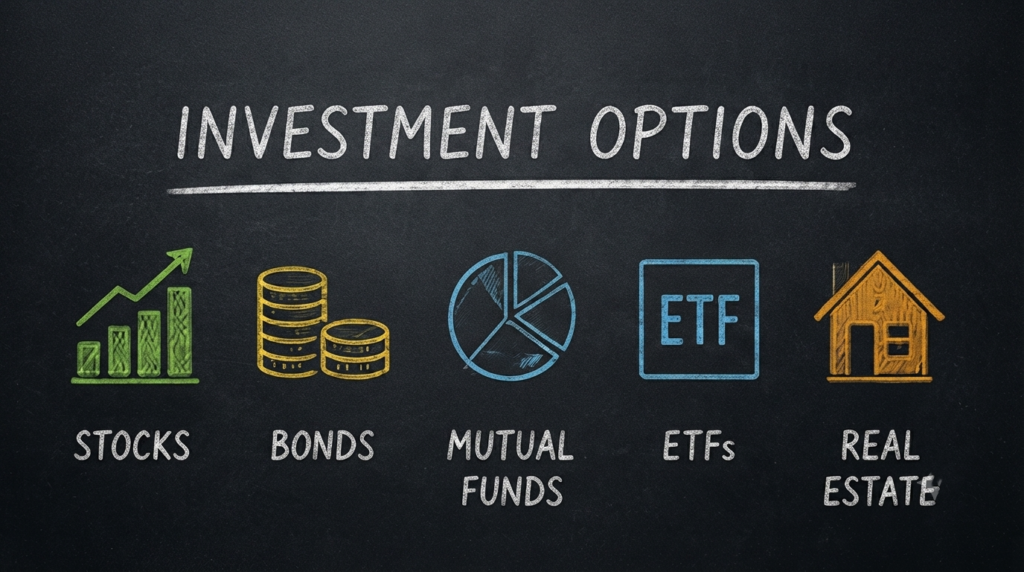
Learn About Different Investment Types
Stocks
Buying stocks means owning a small share of a company. Stocks offer strong long-term growth potential but can experience short-term price swings.
ETFs (Exchange-Traded Funds)
ETFs hold a collection of stocks or bonds, making diversification easier for beginners.
Mutual Funds
These professionally managed funds pool money from many investors and invest in diversified portfolios.
Bonds
Bonds are generally lower-risk investments that provide regular interest income.
Real Estate
Property investing can generate rental income and long-term appreciation but usually requires more capital.
The Power of Diversification
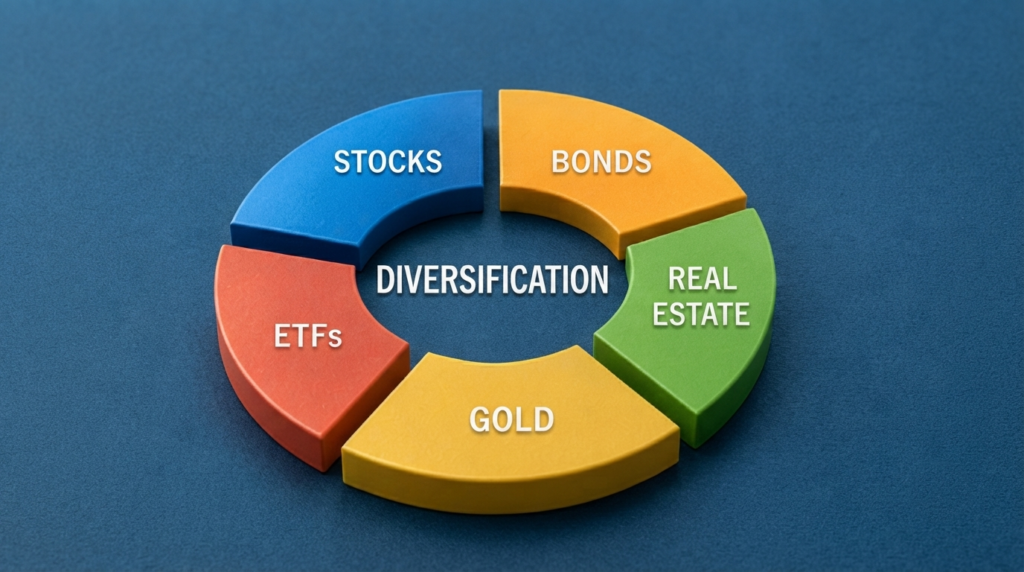
Diversification means spreading your investments across different asset classes rather than putting all your money into one investment.
For example, instead of buying shares of just one company, you might invest in:
- ETFs
- Stocks
- Bonds
- Real estate investments
Diversification reduces the impact of poor performance from any single investment.
Start Small and Invest Consistently
You don’t need thousands of dollars to begin investing.
Many platforms allow beginners to start with relatively small amounts while contributing regularly through automatic investments.
This strategy, often called consistent investing, helps reduce the impact of market volatility over time.
The most important step isn’t investing a large amount—it’s building the habit.

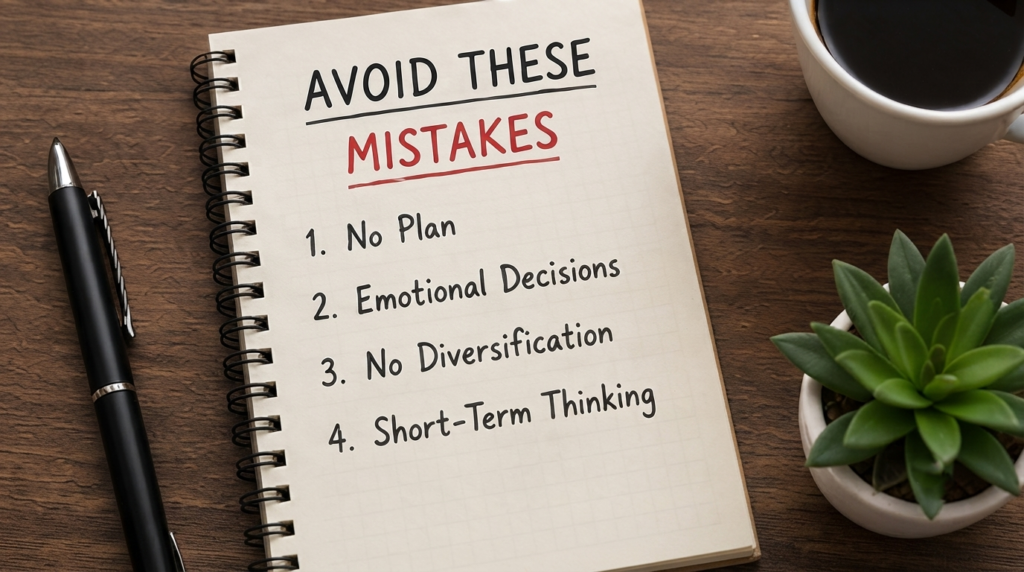
Common Beginner Investing Mistakes
Many new investors make avoidable mistakes.
These include:
- Trying to get rich quickly
- Chasing trending investments
- Investing without research
- Letting emotions drive decisions
- Ignoring diversification
- Frequently buying and selling investments
- Forgetting long-term goals
Successful investors stay patient and focus on consistent progress instead of short-term excitement.
Tips for Long-Term Investing Success
If you want better long-term results:
- Invest consistently.
- Keep learning about personal finance.
- Review your portfolio periodically.
- Reinvest dividends whenever possible.
- Avoid emotional reactions during market downturns.
- Focus on long-term growth instead of daily price movements.
- Stay diversified.
- Continue increasing investments as your income grows.
Small, disciplined actions repeated over many years often produce impressive results.

Conclusion
Learning to invest may seem overwhelming at first, but every experienced investor started exactly where you are today. By understanding the basics, setting realistic goals, diversifying your investments, and staying committed for the long term, you can build a strong financial future.
Remember, investing isn’t about predicting the perfect time to enter the market. It’s about creating a consistent strategy and allowing time to work in your favor. At Read Hub, we believe that financial education empowers better decisions, and taking your first step today can make a significant difference tomorrow.
If you have any questions or concerns regarding this topic, feel free to contact us through our Contact Us page or reach out via the WhatsApp button available on Read Hub. We’re always happy to help!
FAQ
1. What is the best investment for beginners?
Many beginners start with diversified ETFs or index funds because they provide broad market exposure and lower risk than investing in individual stocks.
2. How much money do I need to start investing?
Many investment platforms allow you to begin with relatively small amounts. The key is consistency rather than the initial investment size.
3. Is investing risky?
Yes. Every investment carries some risk, but diversification and long-term investing can help reduce overall risk.
4. Should I invest before paying off debt?
It depends on the interest rate. High-interest debt should generally be prioritized before investing heavily.
5. How long should I keep my investments?
Long-term investing—typically five years or more—has historically provided better opportunities for growth than short-term trading.
6. Can beginners invest without financial advisors?
Yes. Many beginners successfully invest using diversified ETFs, educational resources, and disciplined long-term strategies while continuing to improve their financial knowledge.