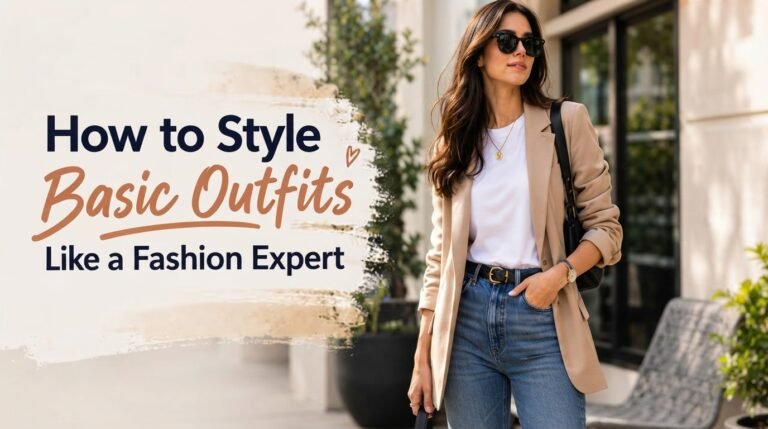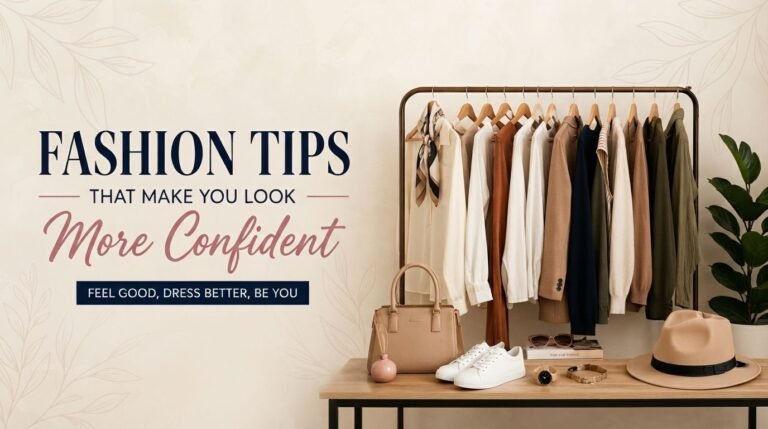

Smart casual dressing is one of the most useful styles to understand because it sits comfortably between relaxed clothing and formal wear. It gives you room to look polished without feeling overdressed or uncomfortable.
The tricky part is knowing where that line actually sits. A T-shirt with jeans can look too casual, while a full suit may feel unnecessarily formal. The right combination depends on fit, fabric, color, footwear, and the occasion. In this guide, Read Hub breaks down smart casual dressing into simple, practical rules you can actually use when putting an outfit together.

What Is Smart Casual Dressing?
Smart casual dressing combines the neatness of formal clothing with the comfort of casual pieces. Think tailored trousers with a knit polo, dark jeans with a structured blazer, or a crisp shirt paired with clean loafers.
The goal is not to make every item look formal. Instead, the outfit should look intentional, clean, balanced, and appropriate for the setting.
A useful rule is simple: choose casual pieces with a polished appearance and formal pieces with a relaxed feel.
For example, a fitted Oxford shirt can make an otherwise casual outfit look refined, while a relaxed blazer can make jeans feel more sophisticated.
Start With the Right Fit
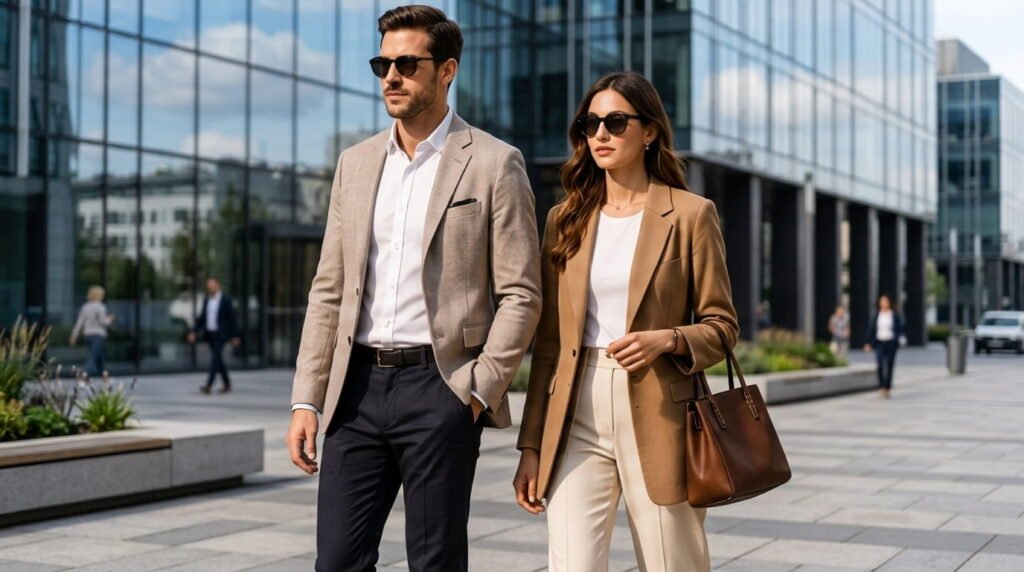
Fit can make or break smart casual style. Even expensive clothing can look untidy when it is too loose, too tight, or poorly proportioned.
Look for clothing that follows your natural shape without restricting movement. Shirts should sit comfortably around the shoulders, trousers should have a clean break, and jackets should not overwhelm your frame.
You do not need every item to be perfectly tailored. However, avoiding extremely baggy or excessively tight clothing will immediately make your outfit look more polished.
Choose the Right Tops
Tops are where you can easily control how formal or relaxed your outfit feels.
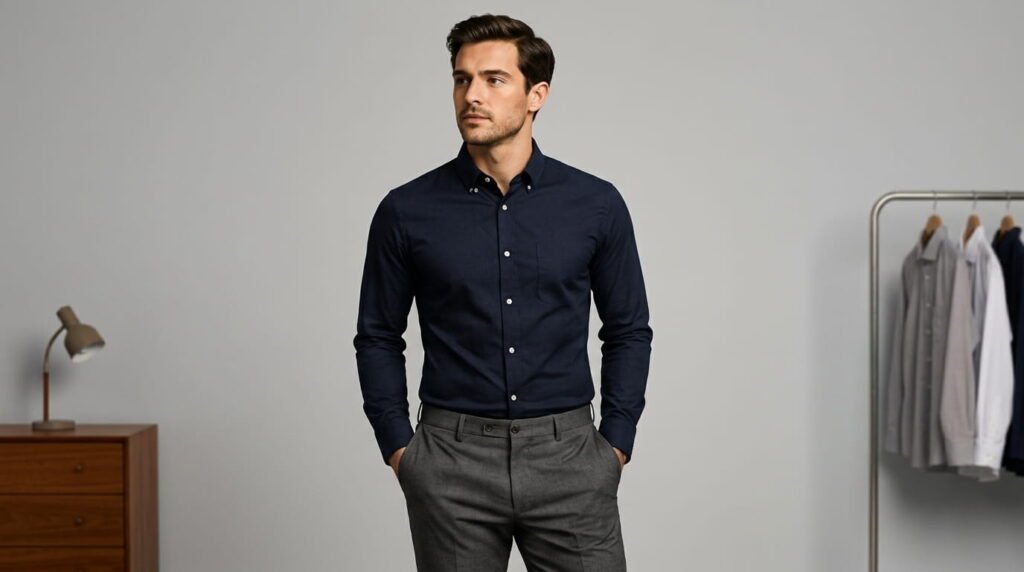
For a smarter appearance, try Oxford shirts, button-down shirts, polo shirts, fine-knit sweaters, or simple blouses. A high-quality plain T-shirt can also work when combined with sharper trousers, a structured jacket, and smart shoes.
Neutral shades such as white, navy, grey, beige, black, and cream are particularly versatile. Once your basics are covered, you can introduce subtle patterns or stronger colors.
The key is balance. If your top is relaxed, keep the rest of the outfit slightly sharper.

Build Around Smart Trousers
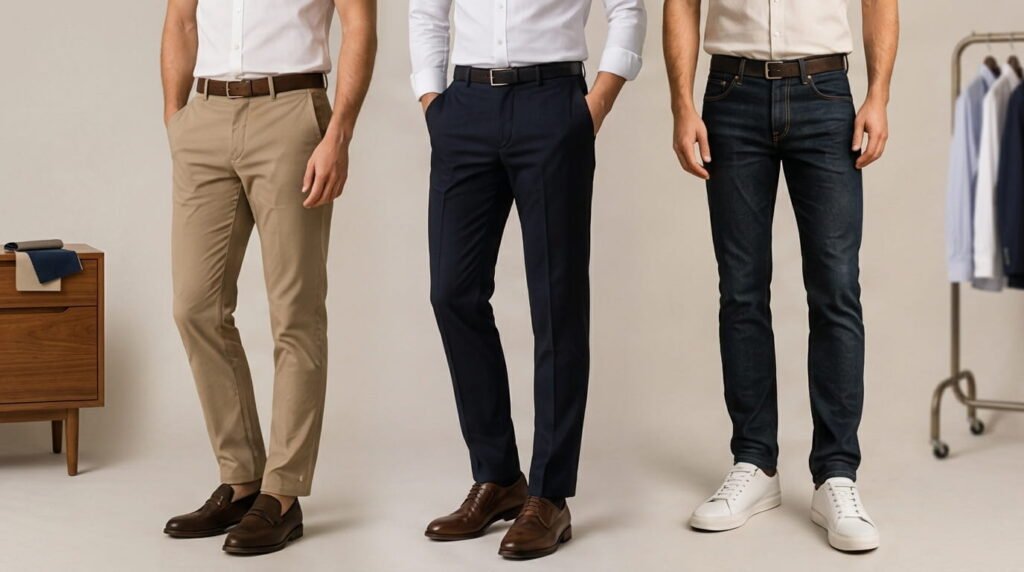
Trousers provide the foundation of many smart casual outfits. Chinos, tailored trousers, pressed trousers, and dark, clean jeans can all work depending on the occasion.
For a professional setting, tailored trousers or chinos are usually a safer choice than distressed denim. For a relaxed dinner or weekend gathering, dark straight-leg jeans can work beautifully with a button-down shirt or blazer.
Avoid excessive rips, heavy fading, oversized cargo pockets, or clothing that looks worn out when the occasion calls for a polished appearance.
Pick Appropriate Shoes
Shoes have a surprisingly large impact on smart casual dressing. A simple outfit can instantly look more refined with the right footwear.
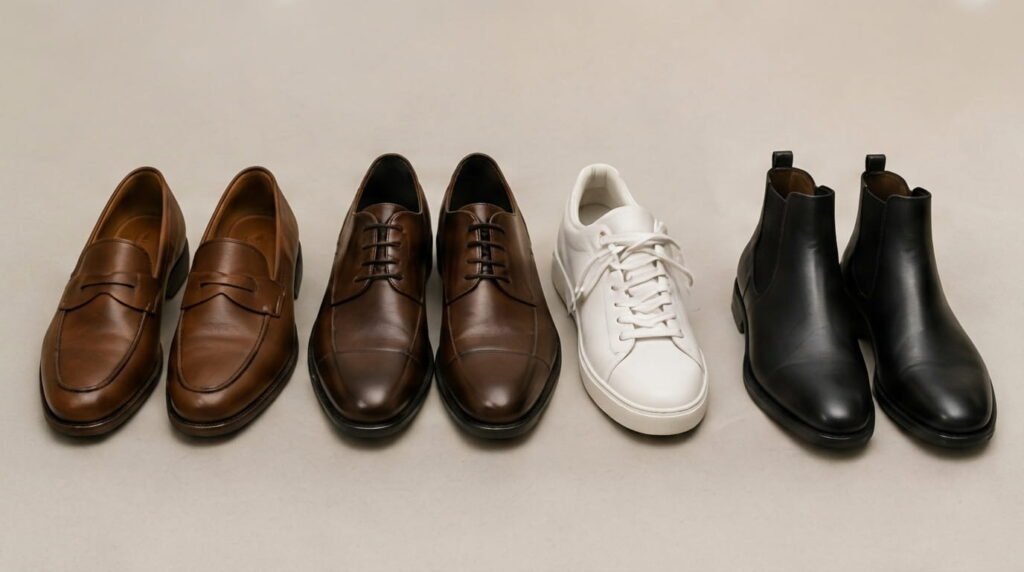
Loafers, Chelsea boots, Derby shoes, minimalist leather sneakers, and clean low-profile trainers are useful options.
The choice depends on the setting. Leather loafers or Derby shoes can take an outfit toward the smarter end, while clean sneakers create a more relaxed look.
Whatever you choose, keep your footwear clean and in good condition. Scruffy shoes can undermine an otherwise excellent outfit.
Use Colors and Layers Wisely
A smart casual wardrobe does not need dozens of colors. A small collection of versatile shades can create many different combinations.
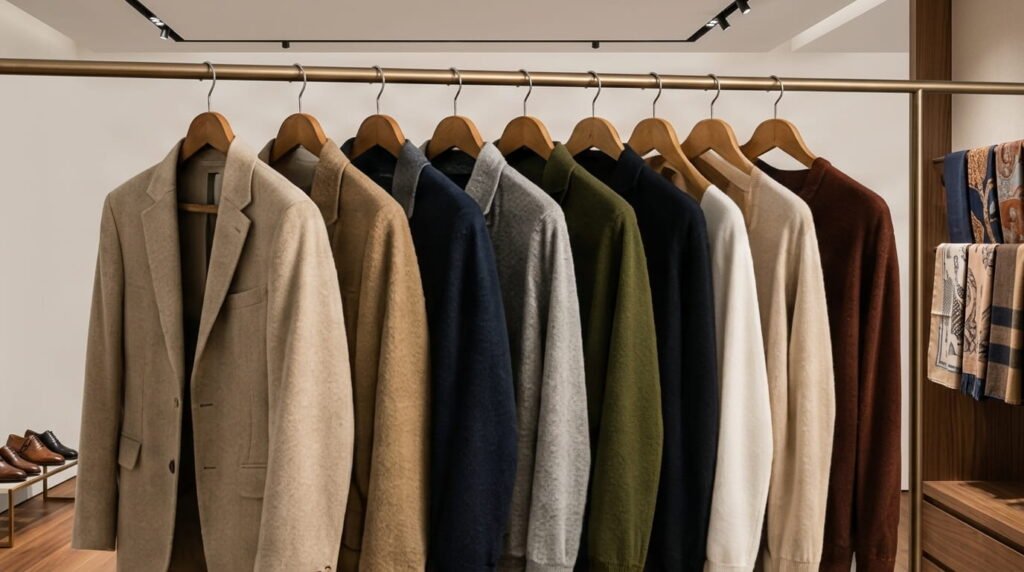
Navy, charcoal, white, cream, beige, olive, brown, and black are easy to mix. You can then add personality through one stronger color or a subtle pattern.
Layering is another effective technique. Try a blazer over a polo, a lightweight sweater over a shirt, or a structured jacket over a simple top.
Layers add depth while helping you adjust your outfit throughout the day.
Accessorize Without Overdoing It
Accessories should complement your outfit rather than become the main attraction.
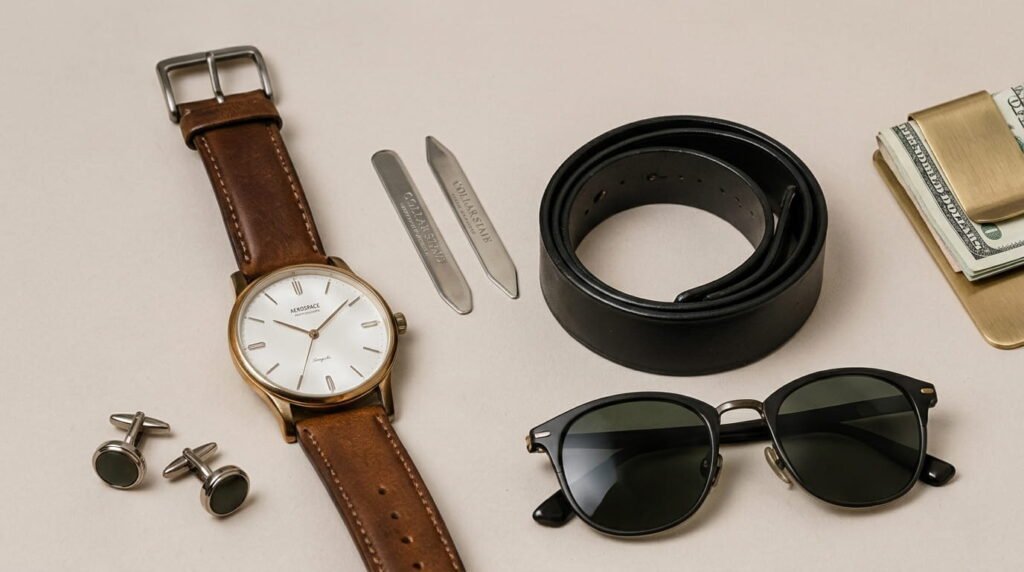
A simple watch, leather belt, understated jewelry, structured handbag, scarf, or pair of quality sunglasses can finish a smart casual look.
Try to coordinate your accessories rather than matching everything perfectly. For example, a brown leather belt can work naturally with brown loafers, while a simple metal watch can complement both casual and formal pieces.
When in doubt, remove one accessory. Smart casual style generally benefits from restraint.
Dress for the Occasion
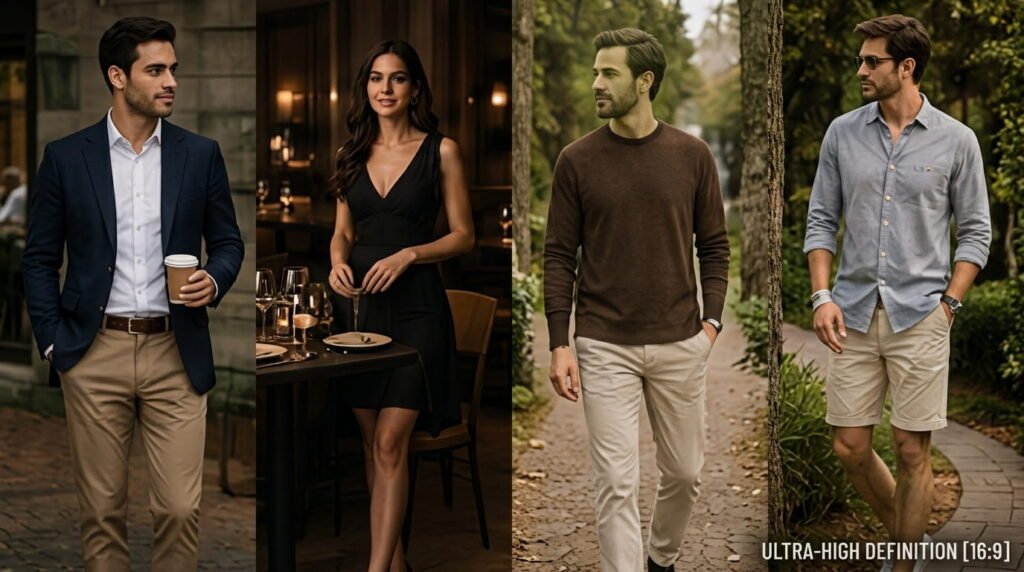
There is no single smart casual outfit that works everywhere. A coffee meeting, restaurant dinner, office event, and weekend gathering can all have different expectations.
For work, lean toward chinos or tailored trousers, a collared shirt, and loafers or clean minimalist sneakers.
For dinner, dark jeans with a blazer, refined knitwear, or a polished shirt can strike the right balance.
For a casual social event, you can relax further with clean sneakers, quality denim, and a simple shirt or polo.
If the dress code is unclear, it is usually safer to dress slightly smarter rather than noticeably too casual.
Common Smart Casual Mistakes
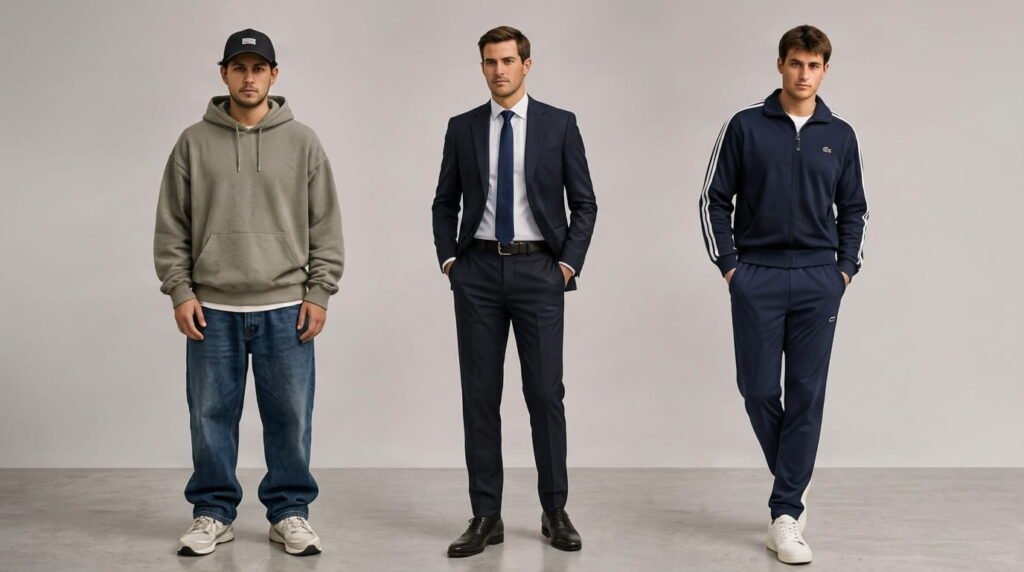
One common mistake is treating smart casual as simply “wear something nice.” The individual pieces need to work together.
Avoid mixing too many competing styles, such as athletic sneakers with very formal trousers unless the combination is deliberately styled.
Wrinkled shirts, stained shoes, worn-out fabrics, excessive logos, and poor-fitting clothes can also make an outfit look careless.
Another mistake is overdressing. Smart casual does not normally require a full business suit, formal tie, or highly polished eveningwear.
Think comfortable, clean, coordinated, and appropriate.
Easy Smart Casual Outfit Formulas
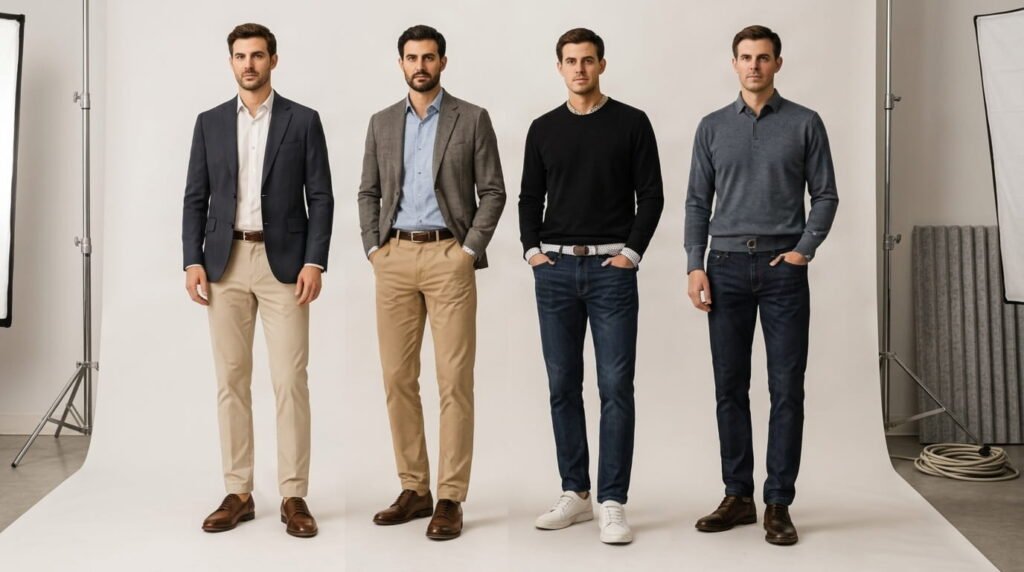
When you are unsure what to wear, start with a simple formula instead of trying to build an outfit from scratch.
For men:
Chinos + Oxford shirt + loafers + lightweight blazer.
For women:
Tailored trousers + fitted knit top + blazer + loafers or clean flats.
Relaxed option:
Dark jeans + plain shirt or quality T-shirt + structured jacket + minimalist sneakers.
Cool-weather option:
Tailored trousers + knit sweater + coat or blazer + Chelsea boots.
These combinations are easy starting points. You can adjust colors, fabrics, and accessories according to your personality and the occasion.
Conclusion
Smart casual dressing is ultimately about finding the right balance between comfort and polish. You do not need an expensive wardrobe or complicated styling rules. Focus on good fit, versatile colors, quality basics, clean footwear, and clothing that suits the occasion.
Once you understand those fundamentals, creating smart casual outfits becomes much easier. Use the ideas in this guide as a foundation, then add your own personality through colors, textures, accessories, and individual pieces. Read Hub aims to make practical style and lifestyle advice easier to understand and apply.
If you have any questions or concerns regarding this topic, feel free to contact us through our Contact Us page or reach out via the WhatsApp button available on Read Hub. We’re always happy to help!
FAQ
What does smart casual dressing mean?
Smart casual dressing combines polished and relaxed clothing. It usually includes well-fitted, clean pieces such as chinos, tailored trousers, shirts, polos, blazers, loafers, or minimalist sneakers.
Can jeans be smart casual?
Yes. Dark, clean, well-fitting jeans can work well for smart casual outfits, particularly when paired with a polished shirt, blazer, sweater, or refined footwear.
Are sneakers appropriate for smart casual outfits?
Clean, simple sneakers can be appropriate, especially in relaxed environments. Avoid heavily worn athletic shoes when you want a polished appearance.
What colors work best for smart casual style?
Neutral colors such as navy, white, black, grey, beige, cream, olive, and brown are highly versatile and easy to combine.
Is smart casual the same as business casual?
No. They overlap, but business casual generally has a more professional focus, while smart casual allows greater flexibility with denim, sneakers, knitwear, and relaxed pieces.