

Managing your time effectively is one of the most valuable skills you can develop as a student. Whether you’re in high school, college, or university, balancing classes, assignments, exams, extracurricular activities, and personal life can quickly become overwhelming. Without a proper plan, even talented students may struggle to meet deadlines or perform at their best.
The good news is that time management isn’t about studying all day—it’s about studying smarter. By building the right habits and using proven planning techniques, you can reduce stress, stay organized, and create more free time while improving your academic performance.
In this comprehensive guide, Read Hub shares practical and realistic strategies that will help you take control of your schedule, increase productivity, and achieve your academic goals without feeling constantly overwhelmed.

1. Why Time Management Matters
Time is one resource every student has in equal measure, yet some consistently stay ahead while others struggle to keep up. The difference often lies in how effectively they manage their day.
Good time management allows you to complete assignments before deadlines, prepare thoroughly for exams, participate in extracurricular activities, and still enjoy personal time. Instead of rushing through tasks at the last minute, you develop a structured routine that reduces stress and improves learning.
Students who manage their time well often experience:
- Better grades
- Lower stress levels
- Improved concentration
- More confidence
- Better work-life balance
- Increased productivity
On the other hand, poor time management leads to missed deadlines, poor-quality work, burnout, and unnecessary anxiety.
Expert Tip: Think of time management as investing in your future. Every hour you plan wisely saves multiple hours of stress later.

2. Set Clear Academic Goals
Successful students don’t simply work hard—they work toward clearly defined goals. Without direction, it’s easy to spend hours studying without making meaningful progress.
Start by identifying what you want to achieve this semester. Your goals might include improving your GPA, completing assignments early, preparing for entrance exams, or mastering a difficult subject.
Break large goals into smaller, manageable milestones. For example, instead of writing “Study Biology,” create specific objectives such as:
- Complete Chapter 3 notes
- Solve 30 practice questions
- Review previous quiz mistakes
- Watch one educational video
Specific goals keep you motivated because you can clearly measure your progress.
SMART Goal Method
Your goals should be:
- Specific
- Measurable
- Achievable
- Relevant
- Time-bound
Instead of saying:
❌ “I want better grades.”
Say:
✅ “I want to increase my Mathematics grade from B to A by the end of this semester.”
Clear goals help you prioritize your time more effectively and stay motivated throughout the academic year.

3. Create a Weekly Study Schedule
One of the biggest mistakes students make is studying only when exams are near. This often leads to cramming, stress, and poor retention.
Instead, create a weekly study schedule that includes regular study sessions throughout the week. Consistency is far more effective than last-minute marathon study sessions.
Start by writing down all your fixed commitments:
- School or university classes
- Tuition or coaching sessions
- Sports or extracurricular activities
- Family responsibilities
- Part-time work (if applicable)
Next, block dedicated study periods for each subject based on its difficulty and upcoming deadlines.
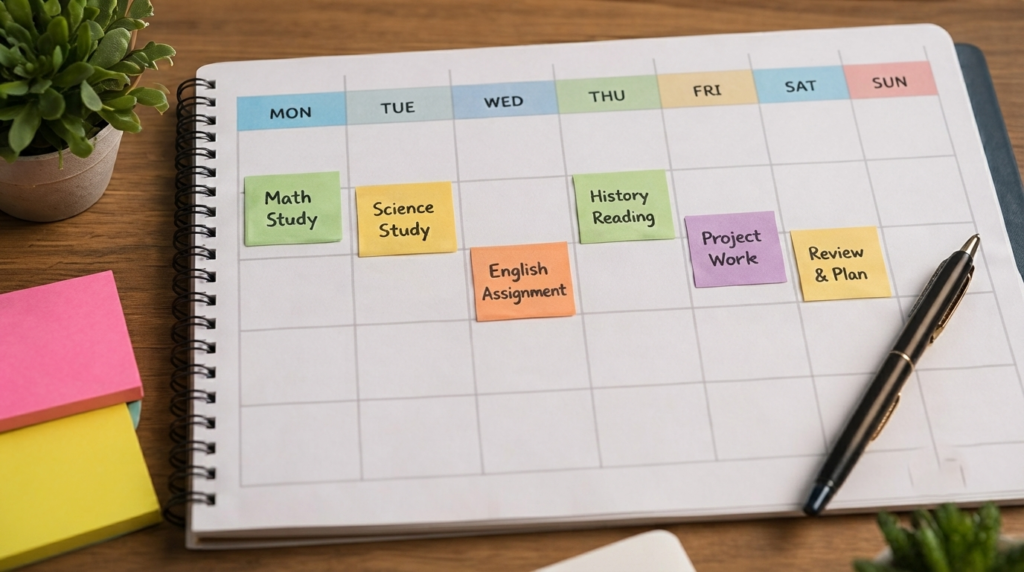
Sample Weekly Routine
- Monday: Mathematics and English
- Tuesday: Science and Revision
- Wednesday: History and Assignments
- Thursday: Practice Tests
- Friday: Review Weak Topics
- Saturday: Group Study or Projects
- Sunday: Weekly Review and Planning
Leave some buffer time each week for unexpected tasks. A flexible schedule is easier to follow than an overly strict one.
4. Prioritize Tasks Effectively
Not every assignment carries the same level of importance. Learning to prioritize helps you focus on what matters most instead of simply staying busy.
A helpful method is to divide tasks into four categories:
Urgent and Important
These require immediate attention, such as assignments due tomorrow or exams happening this week.
Important but Not Urgent
These include long-term projects, revision, skill development, and reading ahead. Spending more time here prevents future stress.
Urgent but Less Important
Tasks like responding to routine emails or organizing files should be completed efficiently without taking up your entire day.
Neither Urgent nor Important
Limit activities such as endless social media scrolling or binge-watching shows during study hours.
Every morning, identify your top three priorities before beginning work. Completing these first creates momentum and ensures your most valuable tasks get done.

5. Avoid Procrastination
Procrastination is one of the biggest obstacles to effective time management. Many students delay difficult tasks because they feel overwhelmed or believe they’ll work better under pressure.
In reality, last-minute studying often leads to lower-quality work, increased stress, and poor memory retention.
One of the simplest ways to overcome procrastination is to start with a very small task. Instead of thinking about writing an entire report, focus on opening your notes or writing the introduction. Once you begin, it’s much easier to keep going.
Practical Ways to Beat Procrastination
- Break large projects into smaller tasks.
- Remove distractions before studying.
- Set a timer for focused study sessions.
- Reward yourself after completing important tasks.
- Study in a clean, organized environment.
- Avoid multitasking during study time.
Remember, progress is better than perfection. Even completing one small task today is more productive than postponing everything until tomorrow.

6. Master the Time Blocking Technique
One of the most effective productivity methods used by top-performing students is time blocking. Instead of studying whenever you “feel like it,” you assign specific blocks of time to specific tasks.
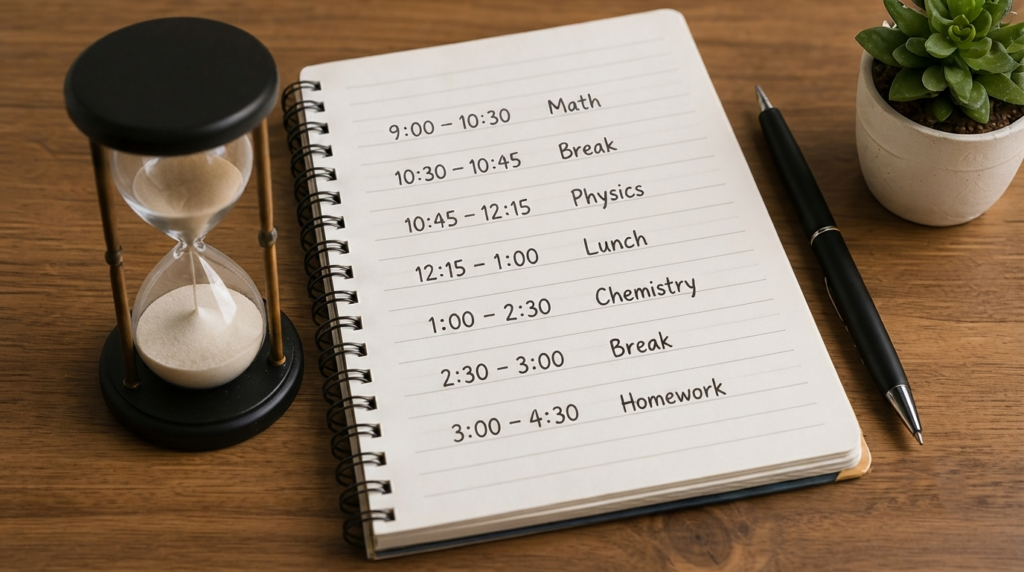
For example, instead of writing “Study Chemistry today,” schedule it like this:
- 9:00 AM – 10:30 AM: Chemistry Chapter 5
- 10:30 AM – 10:45 AM: Break
- 10:45 AM – 12:00 PM: Mathematics Practice Questions
- 2:00 PM – 3:00 PM: English Essay Writing
This approach removes the uncertainty of deciding what to do next and helps you stay focused on one task at a time.
Benefits of Time Blocking
- Reduces decision fatigue
- Increases concentration
- Prevents multitasking
- Makes studying more organized
- Improves productivity
Pro Tip
Don’t forget to schedule short breaks between study sessions. Techniques like the Pomodoro Method (25 minutes of focused study followed by a 5-minute break) can help maintain energy and improve concentration.
7. Eliminate Distractions
Even the best study plan won’t work if you’re constantly interrupted. Notifications, social media, video games, and noisy environments can quickly destroy your focus.
Research consistently shows that every interruption can take several minutes to recover from mentally. That’s why creating a distraction-free study environment is essential.
Common Student Distractions
- Social media
- Mobile notifications
- Television
- Gaming
- Loud environments
- Multitasking
- Unplanned phone calls
How to Stay Focused
- Turn your phone on Do Not Disturb mode.
- Study in a quiet place.
- Keep only the materials you need on your desk.
- Use website blockers during study hours.
- Inform family or roommates about your study schedule.
- Listen to instrumental or white-noise music if it helps you concentrate.
Remember, focused study for one hour is often more productive than three hours filled with distractions.

8. Balance Study and Personal Life
Many students believe that studying longer always leads to better grades. In reality, working without rest often results in burnout, stress, and lower productivity.
A balanced lifestyle helps your brain process information more effectively while improving your overall well-being.
Your weekly routine should include:
- Regular exercise
- Healthy meals
- Quality sleep
- Family time
- Hobbies
- Social activities
- Relaxation
Taking short breaks doesn’t mean you’re wasting time—it helps recharge your mind and keeps your motivation high.
Signs You’re Overworking
- Constant exhaustion
- Difficulty concentrating
- Irritability
- Poor sleep
- Loss of motivation
If you notice these signs, take a step back and adjust your schedule. Academic success is a marathon, not a sprint.

9. Review and Adjust Your Routine
A study schedule should never be fixed forever. As your classes, assignments, and responsibilities change, your routine should evolve too.
At the end of each week, spend 15–20 minutes reviewing your progress.
Ask yourself:
- Which study sessions were productive?
- Which subjects need more attention?
- Did I complete my goals?
- What distracted me the most?
- What can I improve next week?
This simple weekly review helps you identify patterns and continuously improve your time management skills.
Weekly Review Checklist
- Review completed assignments.
- Update your calendar.
- Prepare for upcoming exams.
- Organize study materials.
- Set goals for next week.
- Remove unnecessary tasks.
Small improvements each week lead to significant academic progress over time.

10. Best Time Management Tools for Students
Technology can make managing your schedule much easier when used wisely.
Instead of relying on memory alone, use digital tools to organize tasks, deadlines, and study sessions.
Recommended Tools
Google Calendar
Perfect for scheduling classes, exams, and study sessions.
Microsoft To Do
Helps you create daily task lists and reminders.
Notion
Excellent for organizing notes, assignments, projects, and study plans in one place.
Todoist
Ideal for tracking deadlines and recurring tasks.
Forest App
Encourages focused study by rewarding you for staying away from your phone.
Google Keep
Great for quick notes, checklists, and reminders.
The best productivity app is the one you’ll actually use consistently. Start with one or two tools and build a simple system that fits your routine.

Conclusion
Mastering time management for students isn’t about filling every minute of your day with work—it’s about making smarter decisions with the time you already have. By setting clear goals, planning your week, prioritizing important tasks, eliminating distractions, and regularly reviewing your progress, you can study more effectively while maintaining a healthy balance between academics and personal life.
Remember, good time management is a skill that improves with practice. Start with one or two strategies from this guide, build them into daily habits, and gradually create a routine that works for you. Small, consistent improvements can lead to better grades, lower stress, and greater confidence throughout your academic journey.
At Read Hub, we believe that successful students aren’t necessarily the busiest—they’re the ones who use their time wisely. Put these strategies into action today and take the first step toward achieving your academic goals.
If you have any questions or concerns regarding this topic, feel free to contact us through our Contact Us page or reach out via the WhatsApp button available on Read Hub. We’re always happy to help!
FAQ
1. Why is time management important for students?
Effective time management helps students stay organized, reduce stress, meet deadlines, and improve academic performance while maintaining a healthy study-life balance.
2. What is the best study schedule for students?
The best schedule is one that matches your routine. Include dedicated study blocks, regular breaks, revision sessions, and time for rest to stay productive.
3. How can I stop procrastinating while studying?
Break large tasks into smaller steps, remove distractions, set clear deadlines, and start with the easiest task to build momentum.
4. How many hours should a student study each day?
There’s no universal number. Most students benefit from 2–4 hours of focused study outside class, adjusted according to their workload and goals.
5. What is the Time Blocking method?
Time blocking involves assigning specific time slots to individual tasks, helping you stay focused and avoid multitasking.
6. Which apps are best for student productivity?
Popular options include Google Calendar, Notion, Todoist, Microsoft To Do, Forest, and Google Keep for planning, organization, and focus.
7. How often should I review my study plan?
Review your study plan once a week to track progress, adjust priorities, and prepare for upcoming assignments or exams.
8. Can good time management improve grades?
Yes. Better planning, consistent study habits, and effective prioritization often lead to improved understanding, stronger exam performance, and higher grades.