
Nothing transforms a garden quite like colorful flowers blooming at the right time of year. Whether you’re planting your first flower bed or refreshing an established landscape, choosing flowers that match each season helps your garden stay healthy and attractive all year long. Climate, sunlight, and your USDA hardiness zone all play an important role, but selecting seasonal blooms is the easiest way to enjoy continuous color.
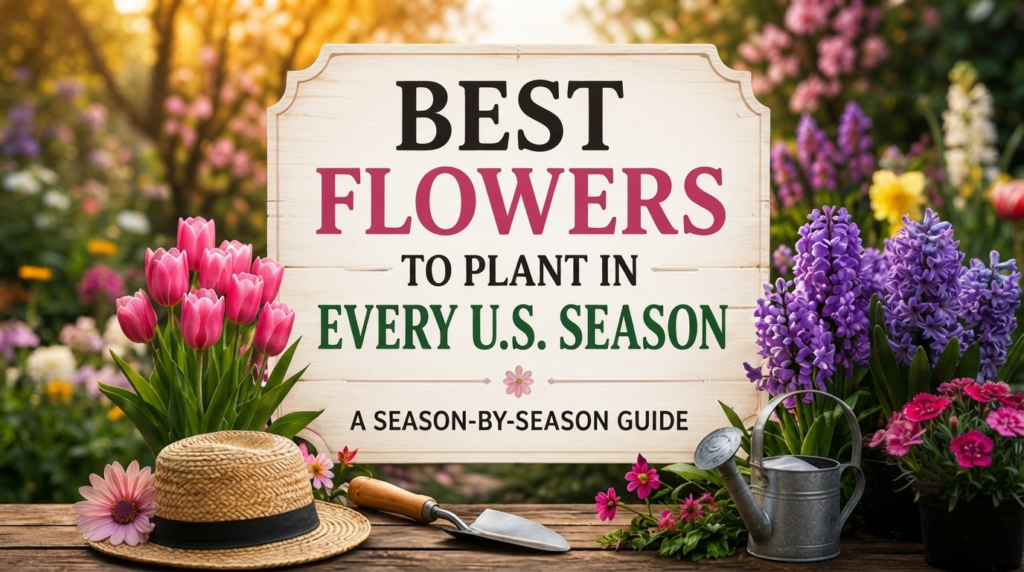
In this guide, Read Hub shares the best flowers to plant in every U.S. season, helping you choose varieties that thrive in changing weather while requiring less maintenance.
Why Seasonal Flower Planting Matters
Planting flowers during the correct season gives them the best chance to establish healthy roots, produce vibrant blooms, and resist pests or diseases. Instead of struggling against the weather, seasonal flowers naturally adapt to local temperatures and rainfall. This means less maintenance, healthier plants, and a garden that stays colorful throughout the year.
Spring Flowers
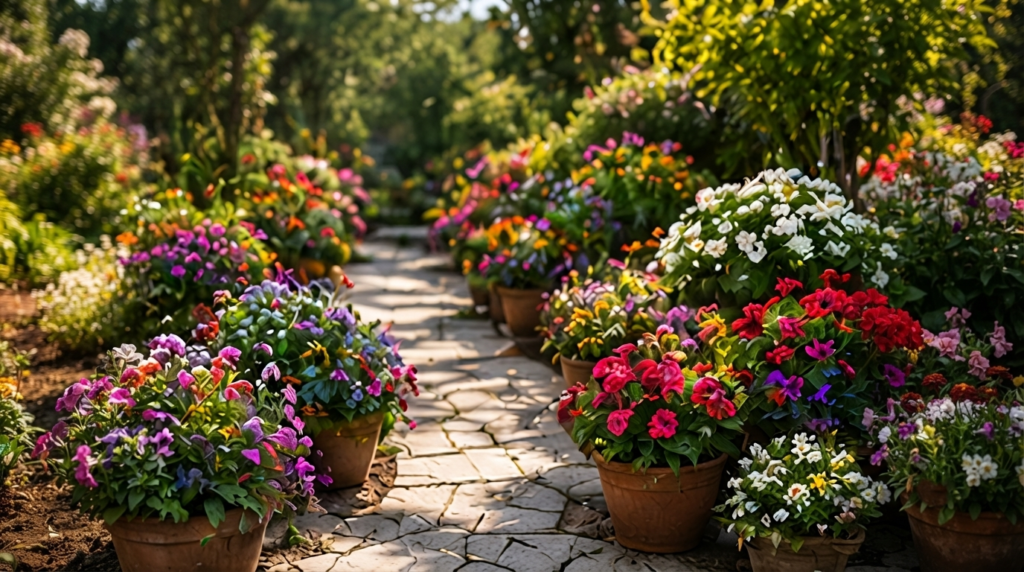
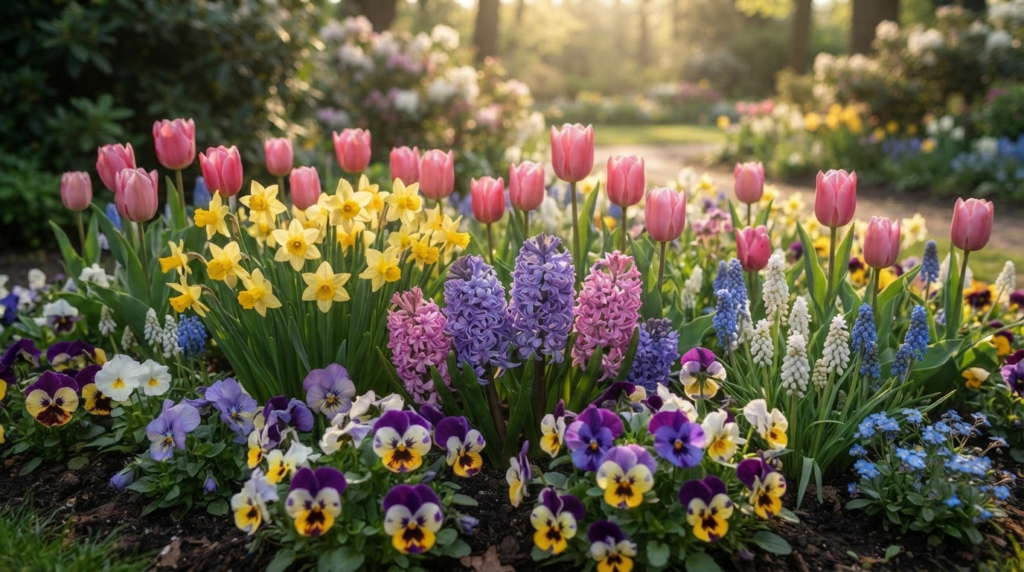
Spring is the season of fresh growth and bright colors. As temperatures begin to warm, many flowers burst into bloom and create beautiful landscapes.
Tulips
Tulips are among the most popular spring flowers in America. Their bold colors and elegant shapes make them perfect for garden beds, borders, and containers. They thrive in sunny locations with well-drained soil.
Daffodils
Daffodils are easy to grow and return every spring with little maintenance. Their cheerful yellow and white blooms brighten gardens while naturally resisting deer and many garden pests.
Pansies
Pansies perform well in cool spring temperatures and provide long-lasting color. Available in dozens of shades, they’re excellent for flower beds, window boxes, and decorative containers.
Hyacinths
Hyacinths produce fragrant flower spikes that add both color and fragrance to spring gardens. They grow best in full sun and are ideal for borders and walkways.
Summer Flowers
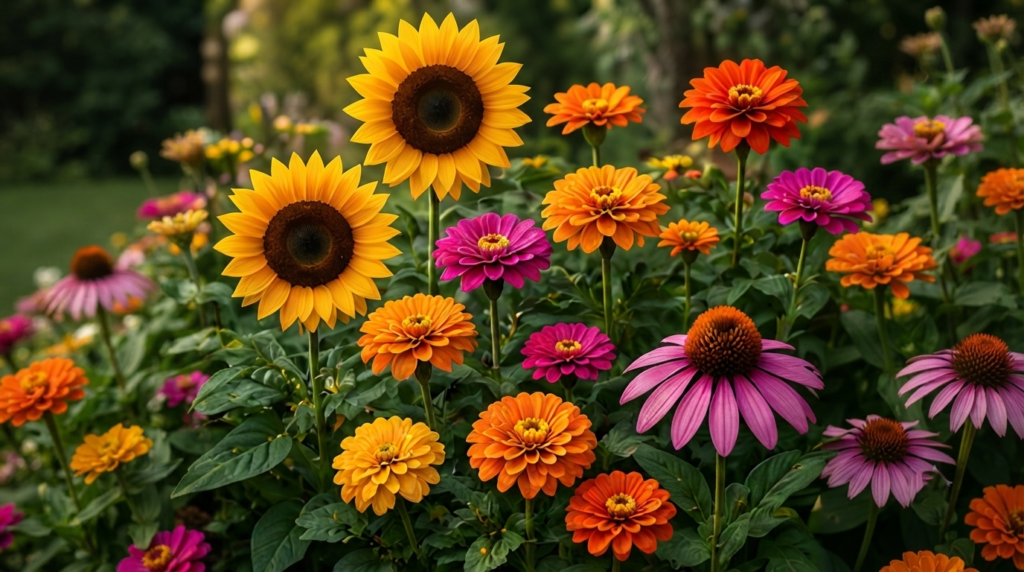
Summer gardens thrive with heat-loving flowers that bloom continuously despite warmer temperatures.
Sunflowers
Sunflowers are iconic summer blooms that attract bees, butterflies, and birds. They grow quickly, tolerate heat, and create a striking focal point in any landscape.
Zinnias
Zinnias are colorful, low-maintenance annual flowers that bloom throughout summer. They’re drought-tolerant and attract pollinators, making them an excellent choice for beginner gardeners.
Marigolds
Marigolds offer vibrant orange and yellow blooms while helping deter certain garden pests. They flourish in full sunlight and bloom from early summer until the first frost.
Coneflowers
Coneflowers are hardy native perennials that tolerate heat, drought, and poor soil. Their long blooming season and ability to attract butterflies make them a favorite for wildlife-friendly gardens.
Fall Flowers
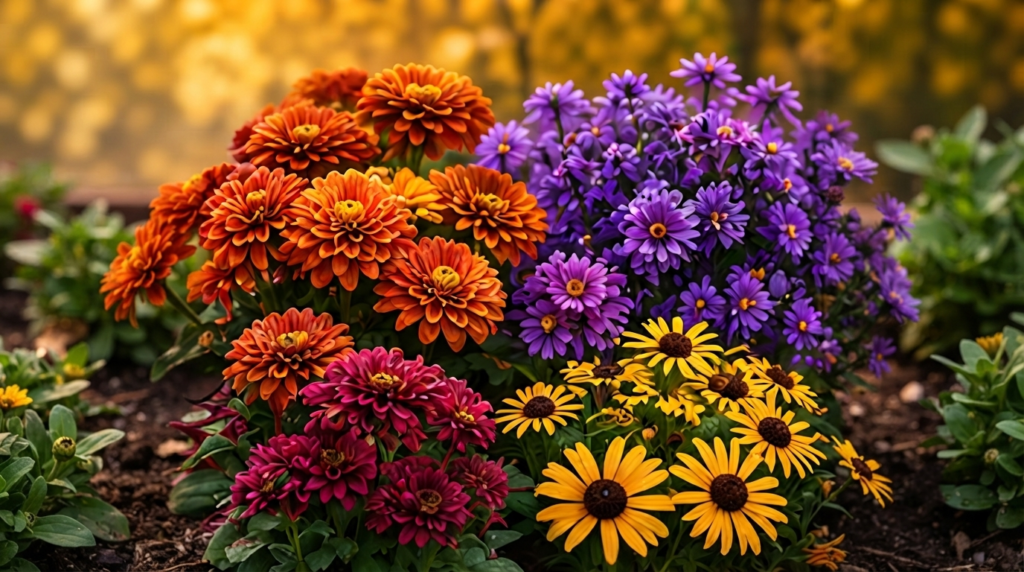
As temperatures begin to cool, fall flowers keep your garden vibrant while many summer blooms start to fade. These plants also provide valuable nectar for late-season pollinators.
Chrysanthemums (Mums)
Chrysanthemums are the classic flowers of autumn. They bloom in rich shades of yellow, orange, red, pink, and purple, adding bold seasonal color to gardens, patios, and containers. They perform best in full sun with well-drained soil.
Asters
Asters produce beautiful daisy-like flowers that bloom late in the season. Their purple, blue, pink, and white blossoms attract bees and butterflies while adding fresh color to fall landscapes.
Sedum
Sedum is a hardy succulent perennial known for its clusters of pink and burgundy flowers. It thrives in dry conditions, requires little maintenance, and continues looking attractive well into autumn.
Black-Eyed Susan
These cheerful golden flowers bloom from late summer through fall. They’re drought-tolerant, easy to grow, and ideal for pollinator gardens, attracting butterflies and bees throughout the season.
Winter Flowers
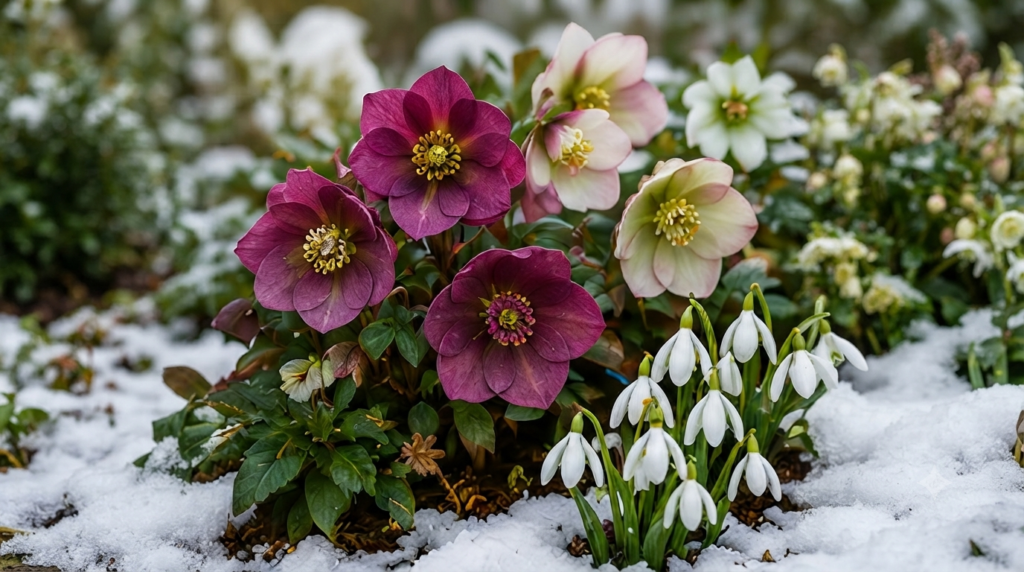
Although winter offers fewer flowering plants, several varieties can brighten your landscape even during the coldest months.
Hellebores
Often called the “Christmas Rose,” hellebores bloom during late winter when few other flowers are in season. They tolerate shade and cold temperatures exceptionally well.
Camellias
Camellias produce elegant blooms throughout winter in many southern U.S. regions. Their glossy evergreen leaves make gardens attractive even when flowers aren’t blooming.
Winter Jasmine
Winter jasmine creates bright yellow flowers on graceful arching branches before spring arrives. It’s perfect for walls, slopes, and garden borders.
Snowdrops
Snowdrops are among the earliest flowers to bloom, often appearing while snow is still on the ground. Their delicate white flowers symbolize the arrival of spring.
Tips for Growing Flowers Year-Round
Creating a colorful garden throughout the year requires more than selecting beautiful flowers. Follow these simple tips:
- Choose flowers suitable for your USDA hardiness zone.
- Plant varieties with different blooming seasons.
- Improve soil using compost or organic matter.
- Water deeply instead of frequently.
- Apply mulch to retain moisture and suppress weeds.
- Remove faded flowers to encourage new blooms.
- Feed plants with a balanced fertilizer during the growing season.
- Combine annuals and perennials for continuous color.
Conclusion
Choosing the best flowers to plant in every U.S. season allows you to enjoy a vibrant, healthy garden throughout the year. By selecting flowers that naturally thrive in spring, summer, fall, and winter, you’ll spend less time maintaining your landscape and more time enjoying beautiful blooms. Whether you’re planting a small backyard garden or designing a larger landscape, seasonal planning is the key to lasting success.
At Read Hub, we encourage gardeners to choose flowers that match their local climate and USDA hardiness zone for the best results.
If you have any questions or concerns regarding this topic, feel free to contact us through our Contact Us page or reach out via the WhatsApp button available on Read Hub. We’re always happy to help!
FAQ
1. What flowers grow best year-round in the USA?
Perennials such as coneflowers, sedum, black-eyed Susans, and hellebores provide blooms across multiple seasons, depending on your climate.
2. How do I choose flowers for my area?
Check your USDA hardiness zone, sunlight conditions, and soil type before selecting flowers.
3. Which flowers are easiest for beginners?
Marigolds, zinnias, pansies, daffodils, and sunflowers are excellent low-maintenance choices.
4. Can I have flowers blooming in every season?
Yes. Planting a mix of spring, summer, fall, and winter flowers ensures continuous color throughout the year.
5. Do seasonal flowers attract pollinators?
Absolutely. Flowers like zinnias, coneflowers, asters, and sunflowers attract bees, butterflies, and other beneficial pollinators.