
Artificial intelligence is no longer something limited to science fiction or research laboratories. AI and the future of jobs are becoming closely connected as businesses use intelligent tools to automate routine work, analyze information, communicate with customers, and support decision-making. From healthcare and finance to education, manufacturing, marketing, and transportation, AI is changing how people work.
But does that mean humans will simply lose their jobs? Not necessarily. The bigger story is more complicated. Some roles may shrink or disappear, while others will change, and entirely new careers are likely to emerge. Understanding these changes can help workers, students, and businesses prepare for what comes next.

How AI Is Transforming Everyday Work
One of the biggest effects of artificial intelligence is automation. AI can handle repetitive tasks such as sorting information, generating basic reports, answering common customer questions, scheduling activities, and processing large amounts of data.
This does not always mean replacing an entire job. In many cases, AI changes individual tasks within a job.
For example, a marketing professional might use AI to analyze customer trends while spending more time developing creative campaigns. A software developer may use AI coding assistants to speed up routine programming tasks and focus more heavily on architecture, testing, and problem-solving.
The result is a workplace where people increasingly work with AI rather than simply competing against it.
Jobs Most Affected by AI
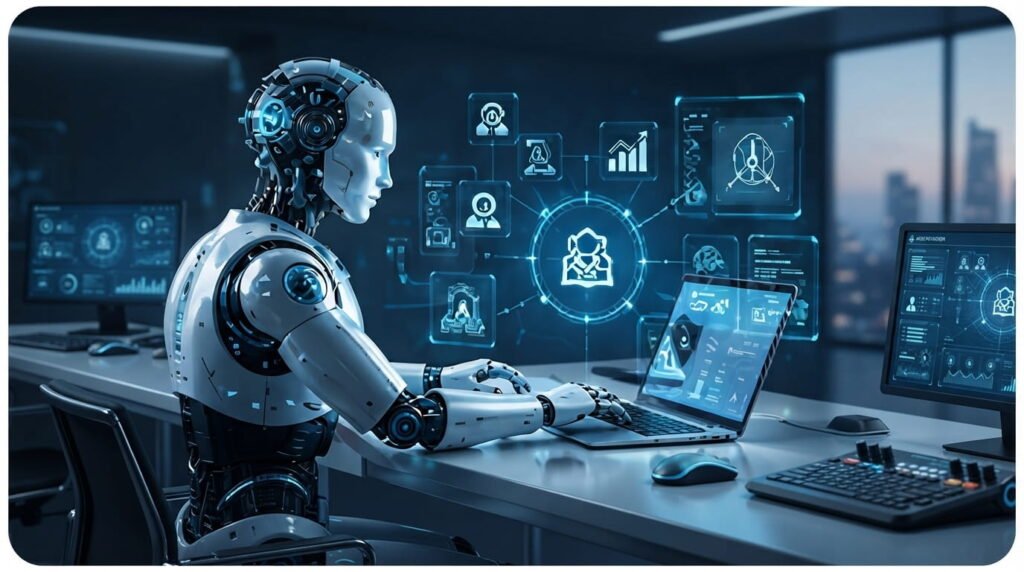
Jobs involving repetitive, predictable, and highly structured tasks are likely to experience greater AI-driven change.
Administrative work, basic data processing, routine customer support, transcription, simple content production, and some entry-level analytical tasks can already be assisted by AI systems.
However, exposure does not automatically mean elimination. Many occupations involve a mixture of technical, social, creative, and judgment-based responsibilities. AI may automate one part while leaving other responsibilities firmly in human hands.
For workers, the important question is becoming less about whether AI will affect their occupation and more about which parts of their work can be automated and which skills remain valuable.
New Careers Created by Artificial Intelligence
Technology has a long history of eliminating certain tasks while creating new forms of employment. Artificial intelligence is following a similar pattern.
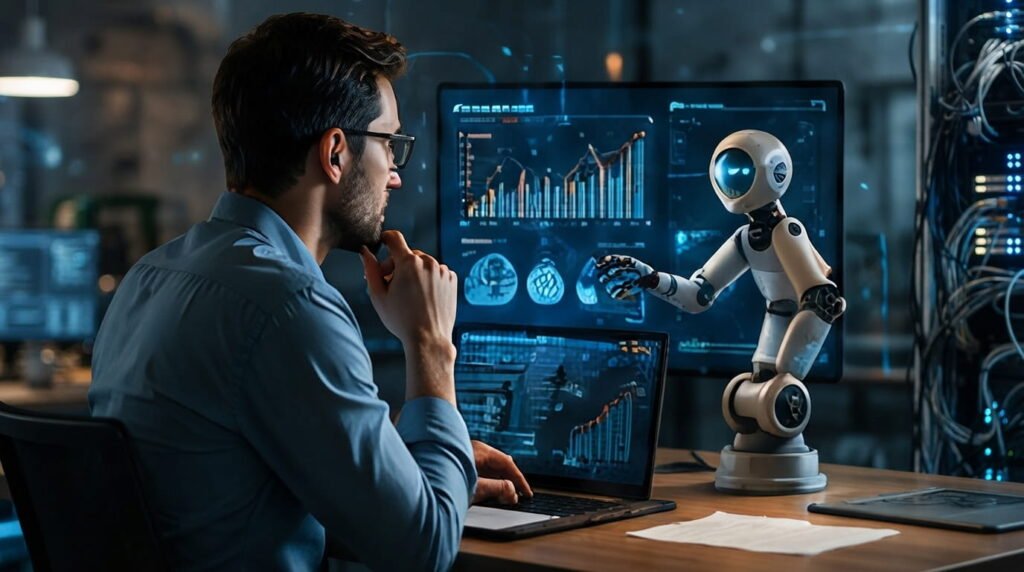
Growing areas include AI development, machine learning, data analysis, AI system management, cybersecurity, AI governance, automation consulting, and technology education.
There is also increasing demand for people who understand both AI and traditional business functions. Companies need professionals who can introduce AI into marketing, finance, healthcare, operations, customer service, and other departments.
This means you do not necessarily have to become a machine-learning engineer to benefit from the AI economy. Learning how to use AI effectively within your existing profession can be equally valuable.

The Growing Importance of Human Skills
As machines become better at generating information and performing routine tasks, distinctly human abilities can become even more important.
Communication, empathy, leadership, critical thinking, creativity, negotiation, teamwork, ethical judgment, and complex problem-solving are difficult to reduce to a simple automated process.
Imagine two employees with access to the same AI tool. One simply accepts whatever the system produces. The other knows how to question the output, identify mistakes, add context, and turn the information into a useful business decision.
The second employee is likely to provide far greater value.
That is why the future of work will not be purely about technical skills. It will also reward people who know how to think, communicate, adapt, and make sound decisions.

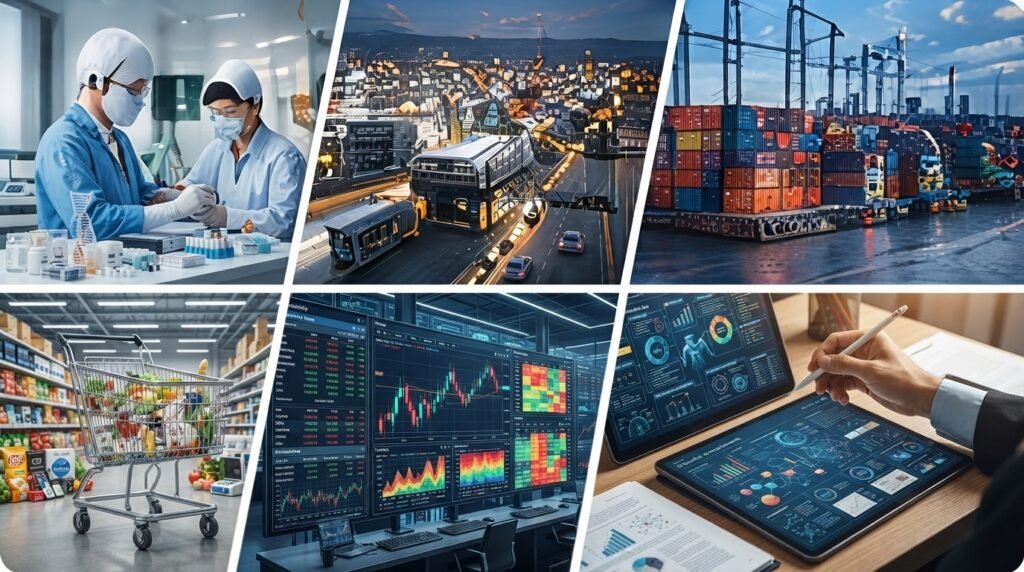
How AI Is Changing Different Industries
The impact of AI looks different from one industry to another.
In healthcare, AI can assist with medical imaging, research, administrative work, and patient-data analysis. In finance, it can help identify patterns, assess risks, detect unusual transactions, and automate customer service.
Manufacturers can use AI-powered systems to monitor equipment and improve production processes. Retail businesses can use AI for demand forecasting, recommendations, inventory management, and customer support.
In education, AI tools can support personalized learning and help teachers with certain administrative tasks. Meanwhile, creative industries are experimenting with AI for image generation, video production, writing assistance, music, and design.
The common theme is not that AI affects every industry in exactly the same way. Instead, it is becoming a general-purpose technology that can reshape tasks across many sectors.
Why Reskilling Matters More Than Ever
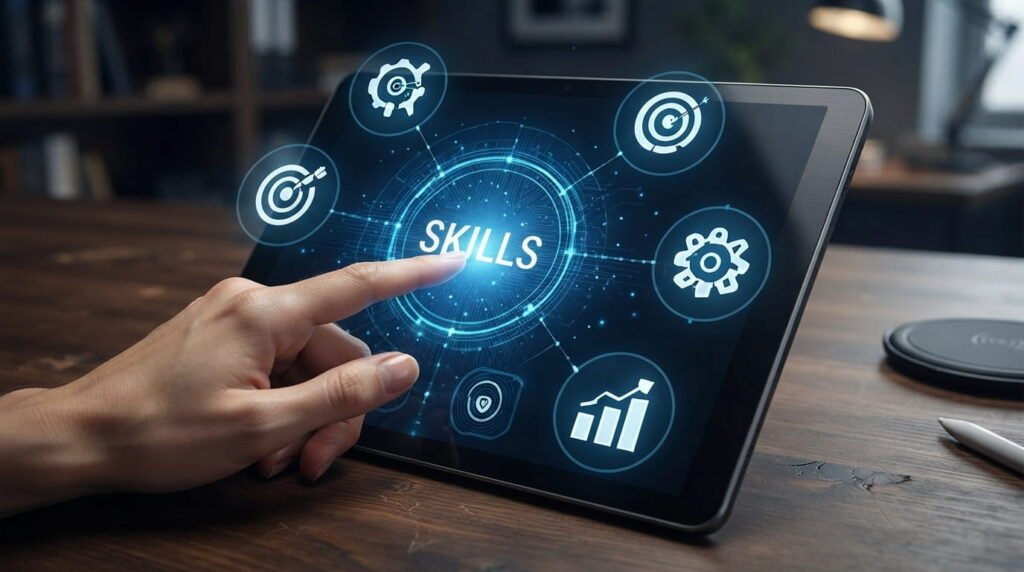
One of the strongest responses to workplace automation is continuous learning.
A skill that is highly valuable today may become less important tomorrow. At the same time, new skills can become valuable surprisingly quickly.
Workers can begin by learning how AI works at a basic level and then explore tools relevant to their profession. A graphic designer might study AI-assisted design. A marketer could learn AI-powered research and analytics. An accountant might explore automation tools for repetitive financial processes.
The goal is not to learn every new technology. Instead, identify the tools and skills most relevant to your career and become comfortable using them.
What AI Means for Remote and Global Work
AI is also changing how teams collaborate across borders. Translation tools, automated meeting summaries, digital assistants, and collaborative software can make international communication easier.
A small company can potentially use AI tools to handle tasks that previously required a larger team. Likewise, individual professionals can use technology to provide services to clients in different countries.
This creates opportunities, but it also increases competition. If technology makes it easier for businesses to hire talent globally, workers may need to differentiate themselves through expertise, reliability, communication, creativity, and specialized knowledge.
In other words, AI can make the global job market more accessible while also making it more competitive.

How Workers Can Prepare for the Future
You do not need to predict exactly what the job market will look like ten years from now. Instead, focus on becoming adaptable.
Start by understanding how AI is being used in your industry. Experiment with legitimate AI tools and learn their strengths and limitations. Improve skills that complement automation rather than competing directly with it.
It is also useful to build a portfolio that demonstrates what you can actually do. Employers increasingly care about practical results, not just certificates.
Most importantly, develop the habit of learning continuously. The ability to learn a new tool or process may become one of the most valuable career skills of all.

Read Hub can help readers stay informed about major technology and workplace trends so they can make more confident decisions about their careers and skills.
The Role of Businesses and Governments
Preparing for AI-driven workplace changes is not solely an individual’s responsibility.
Businesses need to think carefully about how automation affects employees. Instead of focusing only on cutting costs, organizations can invest in training workers and redesign jobs around the strengths of both humans and machines.
Governments and educational institutions also have an important role. Accessible training programs, updated curricula, career guidance, and policies addressing workplace transitions can help people adapt to technological change.
The countries and organizations that treat AI adoption as a workforce-development challenge—not simply a technology upgrade—may be better positioned to manage its long-term effects.

What the Future of Employment May Look Like
The future of jobs will probably not be a simple world where humans work and machines replace everyone else. A more realistic possibility is a workplace where humans and AI systems divide tasks according to their strengths.
Machines can process enormous amounts of information quickly. Humans can provide context, judgment, emotional intelligence, creativity, responsibility, and real-world understanding.
Some occupations will change significantly. Others may become more productive. New roles will emerge around technologies that are difficult to imagine today.
For workers, the most valuable mindset may therefore be adaptability. Instead of asking, “Will AI take my job?” ask, “How can I use AI to become better at my job?”
That shift in thinking can turn technological disruption into an opportunity for growth.

Conclusion
AI and the future of jobs are already connected, and the transformation will continue as artificial intelligence becomes more capable and widely adopted. Some repetitive tasks will increasingly be automated, while new roles and opportunities will develop around AI, technology, creativity, and specialized expertise.
The best response is not to fear every technological change. Learn how AI is affecting your industry, strengthen your human skills, develop technology-related knowledge, and remain willing to adapt.
The future of work will belong not only to people who understand AI, but to those who know how to combine AI with human judgment, creativity, and experience. Read Hub will continue bringing practical insights into the technologies shaping tomorrow’s world.
If you have any questions or concerns regarding this topic, feel free to contact us through our Contact Us page or reach out via the WhatsApp button available on Read Hub. We’re always happy to help!
FAQ
Will AI replace most jobs in the future?
AI is likely to automate many individual tasks, but that does not necessarily mean entire occupations will disappear. Many jobs will evolve as workers use AI to handle certain responsibilities.
Which jobs are most at risk from AI?
Jobs involving repetitive, predictable, and highly structured tasks may face greater automation pressure. However, the actual impact varies significantly by occupation, industry, technology, and workplace.
What skills will be important in an AI-powered job market?
Critical thinking, communication, creativity, adaptability, problem-solving, leadership, digital literacy, and AI-related skills are likely to remain valuable as workplaces evolve.
How can students prepare for AI-related changes?
Students should build strong foundational knowledge while learning how modern AI tools are used in their chosen fields. Practical projects, communication skills, problem-solving, and continuous learning can also improve career readiness.
Should workers learn AI even if they are not in technology careers?
Yes. Basic AI literacy can be useful across many professions. Workers can focus on learning the AI tools and applications that are directly relevant to their particular industry rather than trying to master every technology.