
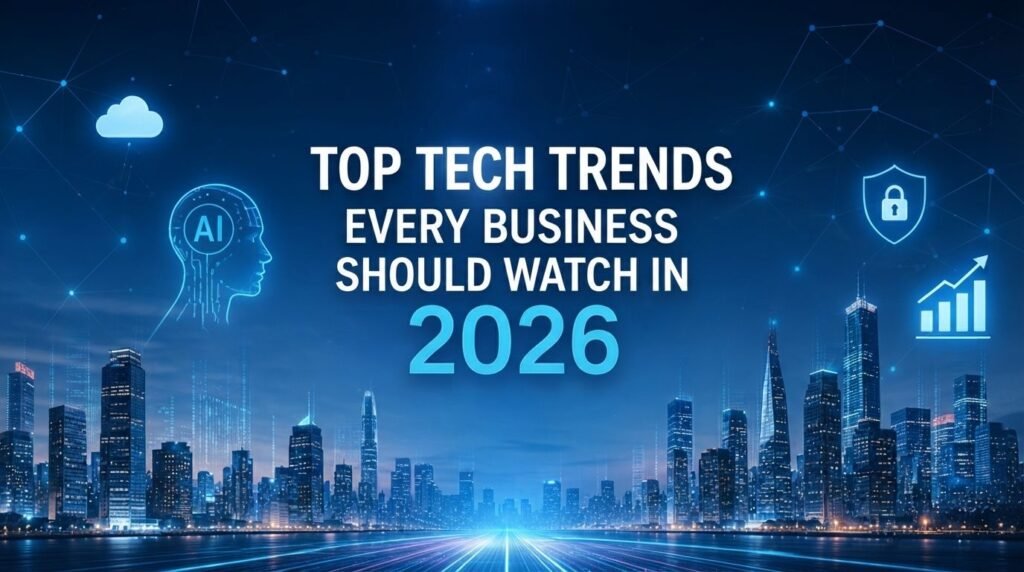
Technology is changing the way businesses operate, compete, and serve customers. In 2026, the biggest tech trends for businesses are no longer limited to futuristic ideas. Artificial intelligence, automation, cybersecurity, cloud platforms, and data-driven decision-making are becoming practical tools for companies of all sizes. The challenge is knowing which trends deserve attention and which are simply hype.
For business owners and decision-makers, keeping up doesn’t mean adopting every new technology. It means identifying innovations that can reduce costs, improve productivity, strengthen security, or create better customer experiences.
1. Artificial Intelligence Becomes More Practical
AI remains one of the most important business technology trends in 2026. However, businesses are moving beyond experiments and looking for measurable results.
Companies are using AI for customer support, content creation, forecasting, document processing, marketing analysis, and internal research. Smaller businesses can also benefit without building expensive AI systems from scratch.
Practical tip: Start with one repetitive business process. Measure the time and cost involved before and after introducing AI. This makes it easier to determine whether the investment is actually worthwhile.

2. AI Agents Transform Business Automation
AI agents are taking automation a step further. Instead of simply responding to a command, an AI agent can potentially complete a sequence of tasks based on a defined objective.
For example, an agent could help organize customer inquiries, gather information, prepare reports, or assist employees with routine workflows.
The key is oversight. Businesses should establish clear permissions, human approval points, and monitoring before allowing AI systems to perform important actions independently.
Practical tip: Begin with low-risk workflows where mistakes are easy to detect and correct.

3. Cybersecurity Becomes a Business Priority
As businesses become more dependent on digital systems, cybersecurity is no longer just an IT concern. A security incident can disrupt operations, damage customer trust, and create significant financial costs.
Businesses should pay particular attention to phishing, ransomware, stolen credentials, insecure software, and risks created by employees using unfamiliar AI tools.
Practical tip: Use multi-factor authentication, keep software updated, limit unnecessary access, train employees regularly, and maintain tested backups.

4. Cloud and Edge Computing Keep Evolving
Cloud computing continues to provide businesses with flexible access to applications, storage, and computing resources. Meanwhile, edge computing is becoming useful when organizations need data to be processed closer to where it is generated.
This can matter for connected devices, manufacturing, retail systems, logistics, and other operations where speed and reliability are important.
Practical tip: Review your current cloud bills and applications before adding new services. Better technology does not automatically mean better value.

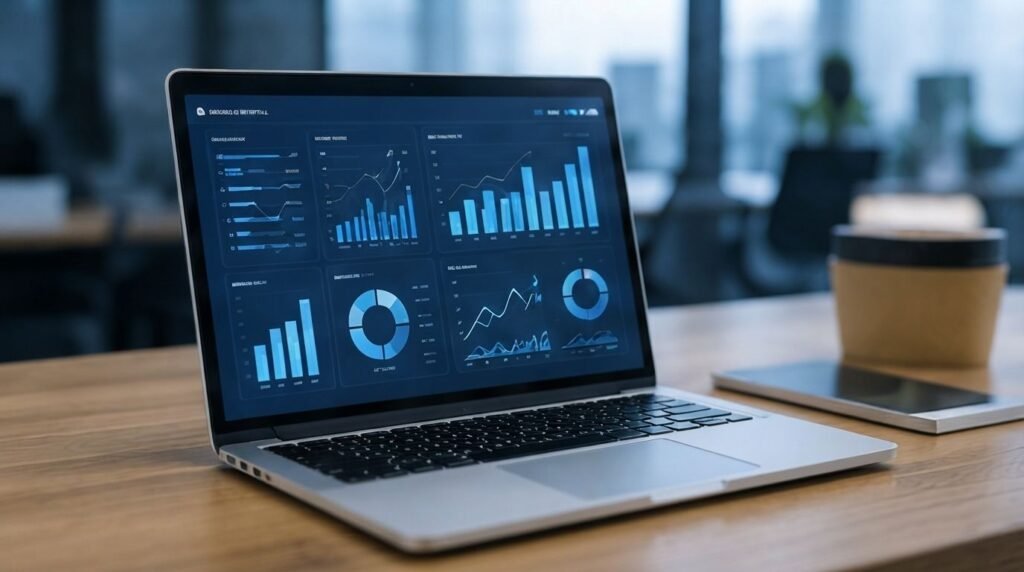
5. Data Analytics Drives Better Decisions
Businesses generate enormous amounts of information, but collecting data is only useful when it leads to better decisions.
Modern analytics tools can help companies identify purchasing patterns, monitor performance, forecast demand, understand customers, and detect operational problems.
The quality of the underlying data matters enormously. Poor or outdated information can produce confident-looking but misleading results.
Practical tip: Create a small set of reliable business metrics and review them consistently instead of tracking dozens of numbers that nobody uses.
6. Digital Customer Experiences Get Smarter
Customers increasingly expect businesses to provide fast, convenient, and personalized digital experiences. AI-powered recommendations, conversational support, personalized marketing, and smoother online purchasing can all contribute to that experience.
However, personalization should not come at the expense of privacy or transparency. Customers want convenience, but they also want to know that their information is being handled responsibly.
Practical tip: Identify the biggest points of customer frustration and improve those first. Technology should solve a real problem rather than simply add another feature.

Conclusion
The biggest tech trends for businesses 2026 are centered on practical improvements rather than technology for technology’s sake. AI, AI agents, cybersecurity, cloud infrastructure, analytics, and digital customer experiences can all create opportunities when implemented thoughtfully.
Businesses don’t need to adopt everything at once. The smarter approach is to identify a genuine business problem, choose the right technology, test it on a manageable scale, and measure the results. For more practical technology and business insights, Read Hub can help you stay informed as the digital landscape continues to evolve.
If you have any questions or concerns regarding this topic, feel free to contact us through our Contact Us page or reach out via the WhatsApp button available on Read Hub. We’re always happy to help!
FAQ
What is the biggest tech trend for businesses in 2026?
Artificial intelligence remains one of the most significant trends, particularly as businesses move from basic AI experiments toward practical automation, analysis, and productivity applications.
How can small businesses benefit from AI?
Small businesses can use AI for tasks such as customer support, content assistance, data analysis, research, scheduling, and repetitive administrative work without necessarily developing their own AI systems.
Why is cybersecurity important for businesses?
A cyberattack can interrupt operations, expose sensitive information, create financial losses, and damage customer trust. Strong security practices help reduce these risks.
Should every business move to the cloud?
Not necessarily. Cloud services can provide flexibility and scalability, but businesses should evaluate their security requirements, costs, workloads, and operational needs before moving systems.
How should a business choose new technology?
Start with a specific business problem. Compare available solutions, calculate the expected cost and benefit, test the technology on a small scale, and measure results before expanding its use.